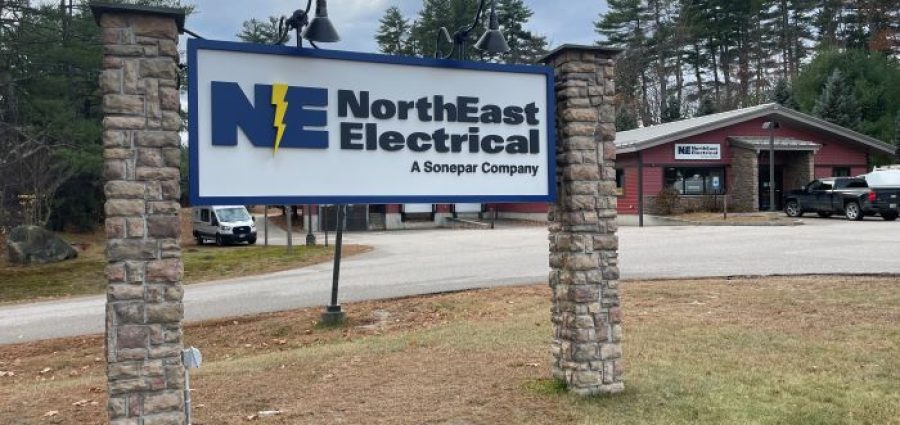
NorthEast Electrical rebranded branch (image courtesy of Sonepar)
New England-based electrical distributor NorthEast Electrical — a Sonepar company — announced the rebranding of Rockingham Electric.
This marks the final step in the integration process of Rockingham Electric, initially acquired in October 2022. The rebranding involved updating the company’s signage on all current buildings to align with NorthEast Electrical’s brand.
“This milestone represents our commitment to growth and excellence in the electrical distribution industry and in this region,” NorthEast Electrical Regional Manager Jake Bishop said in a Nov. 22 news release. “Our combined strengths enhance our ability to serve our customers with an even broader range of products and services and with the most experienced sales associates around.”
NorthEast Electrical said that the integration combines experience and resources, supporting ongoing “innovation and customer satisfaction.” The rebranded entity will maintain a focus on quality and service, consistent with the standards of both companies.
“The final integration has improved our day-to-day operations,” NorthEast Electrical Newington, NH Branch Manager Gino Milne added. “Our customers are excited about the expanded inventory, services, and solutions we offer. It’s been a smooth transition that has brought significant benefits to both our customers and our associates.”
Sonepar was No. 2 on MDM’s Top Distributors List for Electrical, Data and Security.
Related Posts
-
Yanow expands its northeast U.S. presence and product portfolio by adding Syracuse-based Robert H. Schaub…
-

NSI Industries is a manufacturer and distributor in the electrical and HVAC sectors serving customers…
-
Chattanooga-based Power Supply Company expands Cape's reach and service capabilities in Tennessee, Georgia, and Alabama.