
Lead photo: Motion’s Florida Market Distribution Center. (Motion photo)
When Motion’s Kevin Stone describes how his company decides which technology projects to fund, the comparison that comes to mind isn’t another industrial distributor — it’s akin to the reality-TV boardroom of Shark Tank.
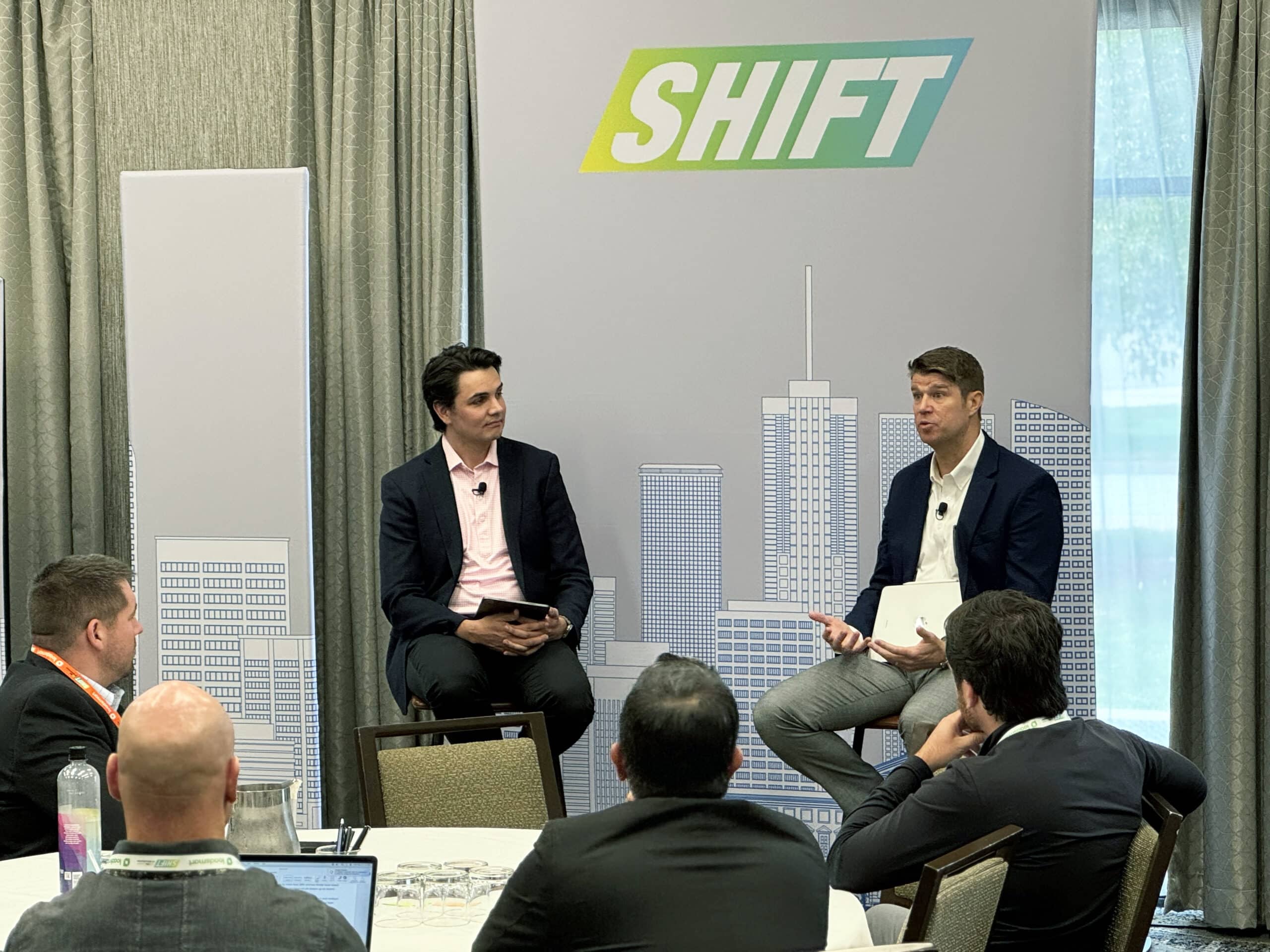
That’s not hyperbole. Stone, Senior Vice President of Technology & Procurement for Birmingham-based Motion, explained during a SHIFT 2025 breakout session that the company’s initiative-selection process has evolved into a standing, high-accountability forum where ideas are pitched, debated and prioritized — all in public view.
“When we have these planning sessions, everybody brings their ideas to the table,” Stone said. “They’ve already created these hypotheses and now have to tell their story in front of the organization. Think of it like Motion’s Shark Tank — everyone’s competing for finite resources, and when you do that transparently, it drives rigor and focus.”
GPC Lifts Motion Forecast After 3Q Sales Rise (Oct. 21)
From Ad Hoc to Accountable
Motion decorated MDM’s 2025 Top Distributors Lists, ranking No. 2 for Industrial Supplies, No. 23 for Electrical, No. 2 for MRO, No. 1 Power Transmission/Bearings, No. 3 for Fluid Power, No. 2 for Hose and No. 8 for Safety. A subsidiary of Genuine Parts Company, Motion has long been among distribution’s largest and most sophisticated operators. With more than 600 locations across North America, roughly 9,500 employees and over $8 billion in annual revenue, the company’s scale demands discipline.
Stone said that a few years ago, Motion’s technology roadmap was cluttered with good intentions but lacked a unified framework for prioritization. “We were just shuffling the deck every week,” he recalled. “It was creating disjointed delivery. Anyone who’s been in software knows the cost of context-switching — it was eating up productivity.”
The “Shark Tank” model emerged from that pain point. Every proposed initiative must now pass a structured intake that defines:
- The problem being solved and desired business outcome
- Investment and cash-flow requirements
- Expected return and risk profile
- Timeline and resourcing, and
- Potential regulatory or customer impacts
Each proposal is scored through a repeatable algorithm that removes subjectivity. The scores feed a master list that determines which projects are committed (fully funded and measured) versus attempted (best-effort, conditional on capacity).
“Once we sign up for something,” Stone said, “it’s measured and reported on a scorecard that’s shared throughout the organization. There’s no hiding behind ‘we delivered software that went to production.’ The real question is: Did it achieve the desired outcome? Are we getting traceable, attributable revenue and profit?”
A Culture of Transparent Debate
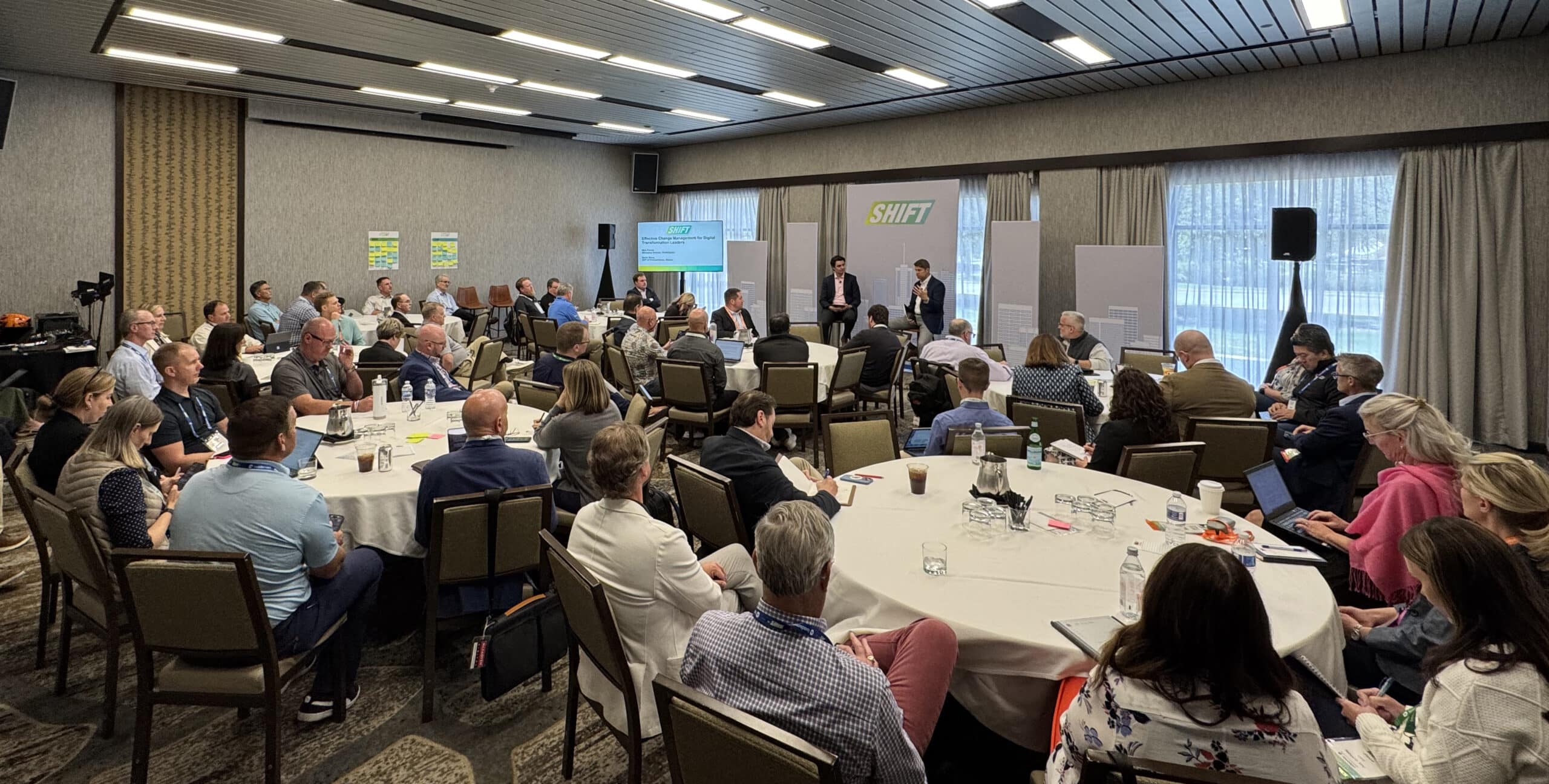
What happens inside Motion’s decision room resembles a cross between a board review and a technical roundtable. About 60 stakeholders — leaders from sales, operations, IT and finance — participate. Ideas are challenged in real time.
“If I pitch something half-baked, someone’s jumping on it,” Stone said. “It’s not punitive. It’s how we run our business differently. That open, transparent debate makes us sharper.”
The result is a cultural shift toward data-driven accountability. Early sessions were “painful,” Stone admitted, but repetition normalized the process. “By the third or fourth time, people came in with sharp pencils. They were ready to defend their proposals and challenge others. If they didn’t, random stuff would get through.”
That mindset — debate grounded in shared purpose — has become Motion’s operating rhythm. It’s not about one person winning or losing. It’s about that elusive third element: what’s best for Motion and its customers.
Breaking Down Ivory Towers
Stone’s SHIFT discussion spanned far more than funding formulas. Much of it focused on bridging the gap between corporate leadership and the field — a perennial challenge for large, multi-branch distributors.
With its hundreds of locations, Motion hears its share of “another idea from Birmingham.” Stone acknowledged that perception with humor but emphasized the importance of trust-based relationships.
“There’s no fixed market on great ideas,” he said. “The magic happens when you’ve got field leaders who know their business backward and forward sitting with engineers who can make that dream come alive. But you can only have that conversation if there’s high trust.”
That trust is cultivated through Gemba Walks — defined as leadership visiting operations firsthand rather than relying solely on dashboards or reports, or “leadership by walking around” as Stone noted. He recounted discovering implementation friction only after chatting in a parking lot with a technician who “flinched” when asked about a new shop-floor app. The experience reinforced his conviction that leaders must observe work in context to gauge whether technology is truly helping.
“If you’re not making time to walk the floor and see how people are using the tools you built, you’re missing the truth,” he said. “You have to build those relationships so your people will tell you what’s really happening — not what you want to hear.”
Shared Accountability, Not “Throw It Over the Wall”
Motion’s technology organization doesn’t operate in isolation. Each initiative includes a cross-functional team that involves the right influencers early — from operations managers to frontline technicians.
“We don’t have a ‘throw it over the wall’ mentality,” Stone said. “It would be arrogant for me to prescribe how to code something, just as it would be reckless for an executive to tell a branch manager how to run their branch. The key is bringing those influencers in and setting expectations: Are you championing this or not?”
That buy-in also neutralizes fear that automation or digital tools threaten jobs. “We tell people, ‘This isn’t coming for your job. It’s going to let you cycle faster and apply your skills to higher-value work.’ When everyone stacks hands, we expect them to walk out of the room championing the initiative.”
As adoption builds, resistance shrinks. Early pilots may stumble, but revisiting those teams to rebuild trust pays off. Once an initiative hits 90 to 95% adoption, detractors aren’t worth much airtime, Stone noted. Before then, if someone’s entrenched in their opposition, it’s seen as a learning opportunity because something likely was either miscommunicated or missed in the functionality articulation.
In the Store: MDM’s U.S. MRO Market Trends Report
From Business vs. IT to “In the Boat Together”
Stone is quick to note that Motion’s transformation wasn’t about methodology or formal change-management frameworks. It was about embedding accountability and transparency into the culture itself.
“We’ve worked hard to break down the walls of ‘that’s finance,’ ‘that’s marketing,’ ‘that’s IT,’” he said. “If you’re in the boat, get in the boat and start rowing. Once people realize the positive and negative consequences are shared, it disarms a lot.”
Part of that shared understanding comes from helping employees connect their work to business impact. “We had coders who didn’t understand what getting five points of margin here or there meant to the organization,” Stone said. “When you show them that, you don’t need to compensate them more — you’ve just included them behind the curtain. That shared accountability is powerful.”
MDM Case Study: LINC Systems (Premium access)
Building With Customers, Instead of Just for Them
The same principle extends to customers. Motion increasingly co-designs digital tools alongside end users instead of building solutions in isolation.
“Early in my career, I was hesitant to release anything early that was customer-facing,” Stone said. “Now I’m probably over-indexed on getting our customers involved. Most would rather move fast and iterate than wait for a perfect solution that never arrives.”
Customer advisory boards and digital experience managers regularly gather input by observing how clients interact with Motion’s platforms. The goal: to shorten the “pain chain” — every extra click, call or manual process that adds friction for both seller and buyer.
“We’re not building large language models or quantum physics,” Stone said with a smile. “If we can smooth out how customers gather knowledge, shop, compare and run their business better, we’ll do well.”

Connecting the Dots: Motion’s Broader Transformation
Stone’s remarks build on the narrative that then-Motion EVP Joe Limbaugh — now Genuine Parts’ Strategic Initiative Execution Leader — told the 2023 SHIFT audience about Motion’s “North Star” as aligning digital investment with customer value creation. That strategy positioned Motion to modernize its eCommerce, pricing and automation ecosystems while maintaining the relationship-driven service culture that built the brand.
Today, that alignment is operational reality. The “Shark Tank” prioritization sessions ensure every digital dollar maps back to measurable customer or productivity impact. The Gemba Walk discipline keeps leadership grounded in day-to-day realities. And the cultural mantra — “Are you in the boat or not?” — reinforces shared ownership from code to customer.
The result, Stone said, is momentum that feeds on itself. “When you lead by example, it’s not about negotiating in the back room,” he told attendees. “Technology is one of the most expensive resources in your organization, outside of your people and your inventory. If you’re not wielding it with a high degree of intentionality, you’re probably wasting money.”
The Big Takeaway for Distributors
Motion’s journey underscores a lesson many distributors are still learning: Digital transformation isn’t just a tech project — it’s a governance and culture project. Creating a transparent, measurable process for initiative selection doesn’t just improve ROI; it drives alignment across every level of the organization.
Or, as Stone put it succinctly: “Every organization has its good-old-boy network, and that’s fine. But at the end of the day, what matters is that Motion as a whole agrees on what’s absolutely best for the customer. When you do that, there’s not much you can’t overcome.”