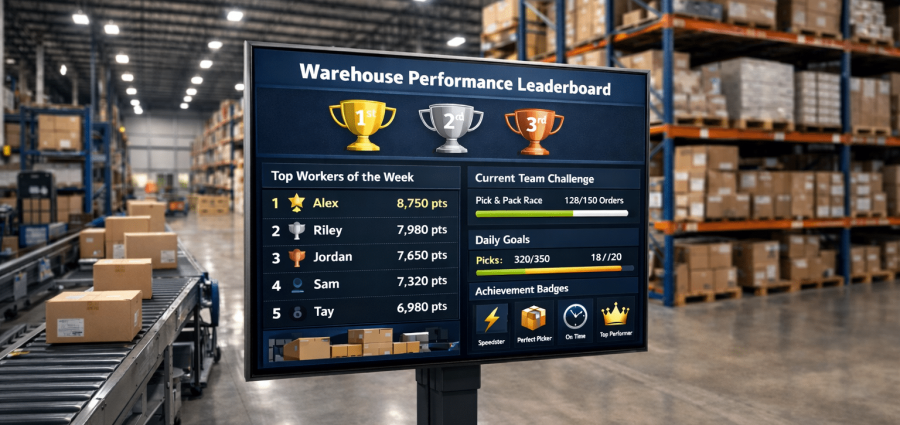
By 2028, 40% of large warehouse operations and distribution centers will have deployed employee engagement and gamification tools to help motivate their workforces, according to new research from Gartner. The firm said labor shortages and rising turnover costs are pushing logistics organizations to invest in new approaches to employee engagement.
Gartner defines gamification in logistics as the use of game design principles — including points, badges, leaderboards and rewards — applied to operational processes to improve performance and strengthen employee engagement.
Federica Stufano, senior principal analyst in Gartner’s supply chain practice, said retention is becoming more critical as labor shortages persist. She added that many employees — particularly younger workers — want more meaningful work experiences and clearer opportunities to succeed, and that gamification can help deliver those outcomes by combining engagement, skill-building and recognition.
Can Gig Work Help Distributors in the Warehouse?
How Gamification is Being Used in Warehouses
Gartner’s research highlighted several common use cases for gamification tools in logistics environments, including:
- Training acceleration: Gamified simulations and interactive quizzes designed to make learning more memorable and reduce time-to-competency for new or seasonal employees.
- Performance and development visibility: Progress-tracking dashboards that show employees how they are developing, with the goal of building confidence and encouraging continuous improvement.
- Operational integration: Gamified modules increasingly embedded into warehouse management systems, robotics platforms and mobile applications.
- Real-time challenges: Challenges tailored to individual and team performance, enabled through integrated systems.
- AI-driven personalization: AI insights that dynamically adjust difficulty levels and rewards to sustain engagement without causing frustration.
Cultural and Compliance Hurdles
Stufano emphasized that the primary challenges of implementing gamification are cultural rather than technological. Gartner cautioned that adoption may be more complex in highly regulated or unionized environments, requiring additional feasibility assessment.
“The most important consideration in introducing gamification is cultural and not technological,” Stufano said, adding that gamification is more likely to succeed when companies treat employees as valuable assets rather than interchangeable labor. Gartner also said legal, compliance and change management efforts must be aligned to ensure gamification motivates workers rather than creating negative outcomes.
The Path to Operational Excellence: Transforming Warehouses for the Future
Rollout Steps
Gartner recommended logistics leaders:
- Build a transparent labor management framework before layering in gamification
- Start with quick wins such as reducing idle or wasted time
- Select pilot sites with strong leadership and frontline enthusiasm
- Allocate extra local change management resources
- Begin with features already embedded in workforce management platforms that integrate with payroll
Related Posts
-

Illinois enacted a new law requiring warehouses to implement tornado safety plans and meet updated…
-

The wire and cable redistributor appointed a new SVP of Distribution and Operations to lead…
-

The partnership's hub-and-spoke model, with over 200 final mile locations, makes two-day warehouse delivery achievable…