Privately‐owned housing units authorized by building permits in January were at a seasonally adjusted annual rate of nearly 1.9 million.
Latest In Economic Trends
The Census Bureau says the combined value of distributive trade sales and manufacturers’ shipments for December dropped 0.7% from November.
Advance estimates of U.S. retail and food services sales for January were $649.8 billion, an increase of 3.8% from December.
Price pressure trends continue as last month’s wholesale inflation was 9.7% higher than January 2021, the Bureau of Labor Statistics said.
The increase in revenues is well above 2019 and 2020 as U.S. inflation rises to its highest level since 1982.
Over the past year, the Consumer Price Index for All Urban Consumers increased 7.5% before seasonal adjustment, the highest since 1982.
Just 54% of new and existing homes sold between October and December were affordable to families earning the U.S. median income.
The adjusted Fastener Distributor Index was 52.7, although modest improvement was seen in most metrics, according to the latest analysis.
The deficit was $80.7 billion in December, up $1.4 billion from a revised $79.3 billion in November.
With significant upward revision in November and December, hundreds of thousands of more jobs were created than economists initially expected.
Year 2021 member sales were $58.5 billion, a 30% increase from 2020, with purchases by member companies from AD supplier partners up 39%.
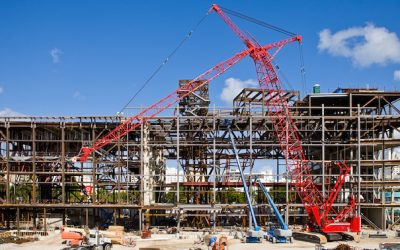
But nonresidential construction spending fell 0.7%, according to an Associated Builders and Contractors data analysis.
The U.S. economy grew in the fourth quarter, but investment in nonresidential structures decreased at an annual rate of 11.4%.
Real GDP increased at an annual rate of 6.9% in the fourth quarter of 2021, according to the Bureau of Economic Analysis.
The forecast is positive for 2022 and beyond as the economy is expected to stabilize, according to MDM's 2022 Industry Outlook.
Census Bureau: Privately‐owned housing units authorized by building permits were 9.1% above the revised November rate.
An Associated Builders and Contractors analysis of Producer Price Index data shows prices increased over November.
The Producer Price Index for final demand increased 0.2% in December, the U.S. Bureau of Labor Statistics reported.
The seasonally adjusted Fastener Distributor Index of 56.2, was driven primarily by a lower employment index.
The industry added 22,000 net jobs in December, and the industry has recovered slightly more than 1 million of the jobs lost in 2020.