Editor’s Note: This is the second of two articles based off of our Feb. 4 MDM Podcast episode and the second in a three-part article series to be packaged into an MDM Case Study. See Part 1 here, and stay tuned for Part 3.
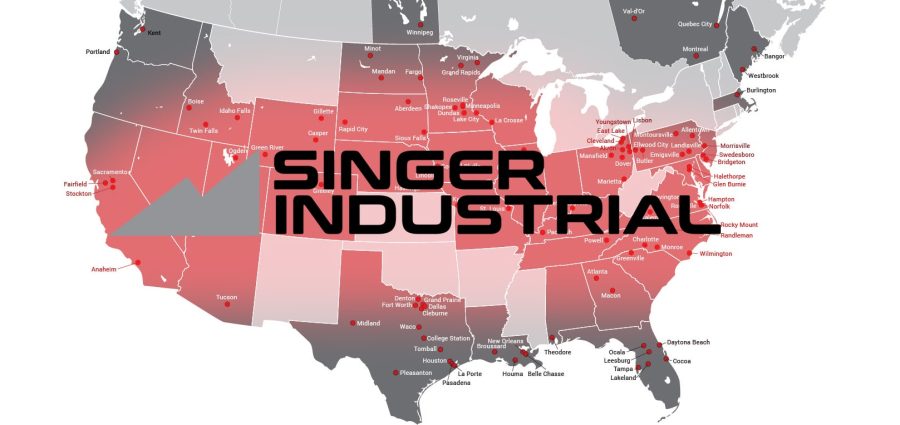
Singer Industrial’s growth story is inseparable from acquisition. Since its founding in 1999, the Dallas-based industrial rubber, fluid power and automation distributor has steadily expanded into a North American platform spanning more than 55 operating companies, 110-plus locations and roughly 1,500 employees.
But President Pete Haberbosch is quick to clarify that Singer is not driven by deal volume for its own sake.

“We don’t buy businesses because we feel like we need another dot on the map,” Haberbosch says. “We buy businesses because they fit strategically, culturally and geographically with where we’re headed.”
That disciplined approach — built on long-term relationship building, rigorous market evaluation and an emphasis on leadership continuity — has shaped Singer’s acquisition playbook and differentiated it in a crowded M&A landscape.
Haberbosch has been on both sides of this experience. He first joined Singer — then SBP Products — in 1999 through its acquisition of Hampton Rubber as the first company in its platform.
A Relationship-Driven Pipeline
Unlike platforms that rely heavily on brokered processes, Singer’s sourcing strategy is deeply relationship-based. Haberbosch, who has led M&A efforts for the company in recent years, spends significant time meeting owners well before a transaction is ever contemplated.
“In many cases, we’ve known an owner for three, four, five years before we ever close a deal,” Haberbosch explains. “We’re not showing up cold. We’re building relationships, understanding their business and letting them understand ours.”
That extended courtship period serves multiple purposes. It builds trust. It allows both sides to evaluate cultural alignment. And it gives Singer a more complete view of how a business performs across economic cycles.
Broker-led deals do happen, Haberbosch notes, but they are the exception rather than the rule. “A brokered process can be fine,” he says. “But our preference is always to have a foundation already built. That tends to lead to better outcomes on both sides.”
The First Filter: Geography and End Markets
Strategic fit begins with geography. Singer evaluates how a potential acquisition complements its existing footprint and strengthens density in key regions across the U.S. and Canada.
“Does the geography make sense for where we are today and where we want to be tomorrow?” Haberbosch says. “That’s always one of the first questions.”
Equally important is end-market diversification. Singer operates across hose, rubber, gasket and sealing products, conveyor belting and fluid power, serving a broad array of industrial sectors. Maintaining balance across those markets is intentional.
“We like to say our end-market pie chart looks like a peacock — it’s wide and diversified,” Haberbosch says. “That’s not accidental. We want businesses that are additive to that balance, not ones that concentrate our risk.”
In other words, Singer isn’t just looking to get bigger; it’s looking to get stronger and more resilient.
The Non-Negotiable: People and Culture
While geography and markets matter, Haberbosch emphasizes that people ultimately determine whether a deal gets done.
“This is a people game,” he says. “If the people don’t align, it doesn’t matter how good the numbers look.”
Singer’s acquisition model is built around leadership continuity. In most cases, owners and senior managers remain in place post-acquisition, often reinvesting in the business and taking on expanded roles within the broader platform.
“If we’re partnering with someone, we want them engaged,” Haberbosch explains. “We’re not looking for someone who wants to sell and disappear the next day. The best outcomes happen when leaders stay and help us grow.”
That focus on cultural compatibility ties directly into Singer’s broader operating philosophy of coordinated autonomy. The company seeks entrepreneurs who value independence but are open to collaboration.
“We’re not trying to come in and change everything about a business,” Haberbosch says. “We’re trying to support what made it successful in the first place.”
Discipline in Walking Away
In a competitive acquisition market — particularly within industrial distribution, where consolidation has accelerated — deal discipline can be difficult to maintain. Haberbosch acknowledges the temptation that can accompany momentum.
“You can get deal fever,” he says. “You start thinking scale alone is the answer. But we’ve learned that not every opportunity is the right one.”
Singer evaluates each potential transaction through the lens of long-term platform health rather than short-term expansion. If cultural fit or strategic alignment is off, the company is prepared to walk away.
“We’d rather pass on a deal than force something that doesn’t fit,” Haberbosch says. “Once you bring a company into the platform, you’re responsible for it. You have to be confident it belongs.”
That mindset reflects Singer’s stewardship mentality — particularly given the legacy brands it acquires, many of which have operated independently for decades.
Integration Without Overreach
Another key component of Singer’s acquisition process is measured integration. While some platforms mandate immediate system conversions and centralized operating procedures, Singer takes a more deliberate approach.
“Nothing has to happen in 30 or 60 days,” Haberbosch says. “We look at the business and ask: What makes sense? When does it make sense?”
Historically, Singer left acquired companies’ ERP systems intact. As the platform scaled, however, managing a growing number of disparate systems became increasingly complex. The company is now migrating businesses to Epicor Prophet 21, but on a timeline that aligns with operational readiness.
“The best conversion is still a distraction,” Haberbosch notes. “So we plan it carefully. We listen. We make sure the business is ready.”
Importantly, Singer built an internal team of ERP specialists — many of whom came up through acquired businesses — to guide implementations. That peer-driven support model reinforces trust and reduces friction. And, each acquired company serves as a case study to inform future transactions while giving Singer plenty of testimonial to provide targets and anyone currently being integrated.
“When someone who’s lived it is helping you through it, that changes the dynamic,” Haberbosch says.
Backed for Continued Growth
Singer’s disciplined acquisition strategy is supported by long-term capital. The company is majority-owned by a continuation fund anchored by AEA Investors, positioning it with both financial backing and strategic flexibility to pursue additional growth.
But Haberbosch emphasizes that capital alone doesn’t dictate pace.
“Just because you have capital doesn’t mean you deploy it without discipline,” he says. “Every deal has to strengthen the platform.”
Looking ahead, Singer expects acquisitions to remain central to its strategy — complemented by organic growth initiatives in digital marketing, technology and talent development.
“Our goal isn’t just to get bigger,” Haberbosch says. “It’s to build a platform where great distributors can thrive.”
A Long-Term View of Consolidation
Industrial distribution remains highly fragmented, with many family-owned businesses facing succession challenges. Singer sees opportunity in that dynamic — but approaches it with patience in finding the right partners. While the pace of industry consolidation remains robust, there are plenty of great businesses out there.
The pattern that emerges is not one of rapid-fire transactions but steady, deliberate expansion. In a sector where scale often comes at the expense of identity, Singer’s M&A playbook reflects a different thesis: growth through alignment, continuity and trust.
“We want to be the best home for these businesses,” Haberbosch says. “If we stay true to that, the growth will follow.”
Up Next
In the third part of this series, we’ll explore Singer’s approach to technology — how it keeps all 55+ operating companies in the platform on the same page; prioritizes cybersecurity; and encourages AI innovation.