Editor’s Note: This article is the first in a three-part article series. Stay tuned for parts 2 and 3.
The focus in each of the five previous case studies in MDM’s series has been on some of the leading and largest strategic electrical, industrial, HVACR and construction materials distributors. In each of these so far, industry writer John Gunderson has detailed the specific ways these five companies have grown and evolved their go-to-market models.
Each, in their own way, had developed a unique set of value propositions to their stakeholders up and down the supply chain. Each found a way to leverage these unique strengths and grow across the metrics that define success and really matter: revenue, market share, efficiency and bottom-line profitability.
For this sixth case study, I wanted to pivot to focus on the potential that independent, privately-held distributors have to build a playbook for transformation and accelerated growth — regardless of size. MDM has profiled hundreds, if not thousands, of these successful innovators since its first publication year of 1967.
It’s hard to think of a product category more commoditized and private-labeled than nails. But that doesn’t mean a distribution business is limited by its product portfolio.
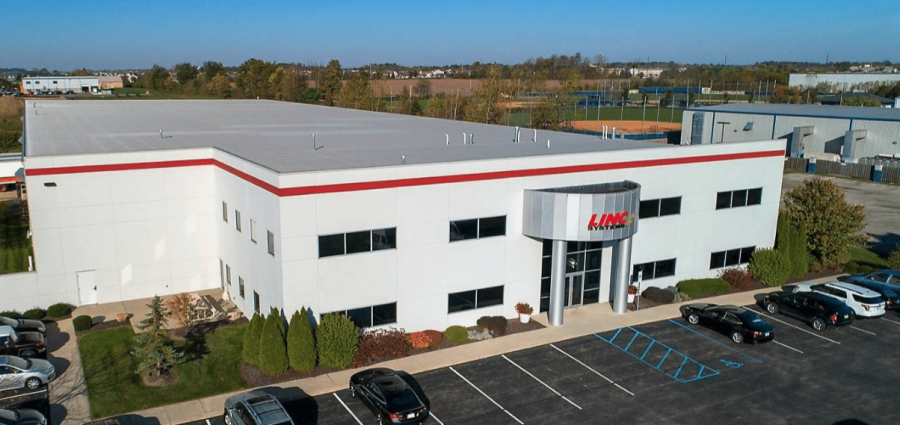
Case in point is LINC Systems — a 35-year-old distributor of fastening and packaging systems and products. Their core product category was originally collated nails — the coils or strips used in nail guns in production facilities; but the company evolved in its product offerings and value proposition. Primary customer segments today include the furniture industry, pallet builders and a smaller segment of home builders and lumber yards. Their packaging division serves a broader range of food and other manufacturing sectors, focusing on strapping, shrink-wrapping systems and specialized packaging machines.
LINC Systems delivers a value-added, one-stop solution for customers. They provide the tools and consumables, but they’ve also created a tiered service model that goes beyond tool maintenance and repair to ensure customer uptime and loyalty. They developed a program with trained and certified technicians, with a high-tech service group capable of assisting customers with design and improvement of their packaging systems. The combination of expertise, reliability and relationship are key differentiators that create competitive advantage.
Let’s look at how LINC arrived at its current state before diving into the strategic elements of the company’s process improvements and goals that set the stage for the rest of this series.

LINC’s Path to Today
LINC Systems’ transformation journey starts with the founder’s growth mindset. Ted Azar grew the company organically from its start in 1995 and fueled expansion in the early 2000s with its acquisition of a New England company that ultimately expanded its market coverage to 22 states.
The next growth stage emerged in the early 2010s as Stanley Bostich — a division of tool maker Stanley Black & Decker — divested portions of its industrial fastening solutions business that specialized in the furniture manufacturing industry as part of a strategic realignment. LINC was one of about four regional buyers to step in and take over that business (and ultimately acquired most of the others).
For the next several years, LINC Systems accelerated its growth into the new territories it entered by acquisition. By 2013 the company grew to more than $50 million in annual revenues and 70+ employees. It was in this time period that the first stage of a growth platform strategy formed. A critical component of that focused on strengthening its marketing and business development capabilities.
The company continued to strengthen its core operating infrastructure throughout the mid-2010s. Then, in 2016, the company’s evolution reached a new inflection point, when an industry M&A conference sparked a range of concepts for funding and accelerating growth to a new level. The leadership team embraced a “grow-or-die” mentality that propelled a series of strategic decisions and focus on process improvement.
The wake-up call was that if the company didn’t grow, it would itself be acquired. The team began to set priorities with a strategy hinged on two critical pillars: acquisitions and infrastructure. At the top of the list was pricing management. That dovetailed into strengthening its technology infrastructure together with improving its data analytics capabilities.
This urgency catalyzed a series of initiatives that fundamentally reshaped LINC’s business. The company’s grow-or-die mindset shift in 2016-2017 to build an acquisition platform evolved into a transformation roadmap across four major project areas (Part 2 of this case study details each):
- Digital & Analytics
- Marketing platform
- Business platform
- Sales transformation
The strategy and execution work ultimately led to its acquisition by Center Rock Capital Partners in 2018. This move was pivotal, marking the beginning of a seven-year period characterized by aggressive growth through the acquisition of seven complementary businesses.
Process Improvement Journey — Next-Level Platform Building

He emphasized the importance of having a growth-focused vision: “If you’re going to scale, you can’t do it on gut instinct. You have to engineer the business to support that growth – structurally, digitally and culturally.” The strategic vision highlights LINC’s commitment to creating a scalable platform capable of supporting continued expansion. The business today is well down that integration path of six acquisitions underpinned by a unified Azure Data Warehouse system.
The initial acquisitions of companies such as PSD in Cincinnati (2018) and RV Evans in Illinois (2020) broadened geographic reach and added complementary capabilities in packaging and fastening. “The same day we were acquired by Center Rock, we closed on PSD,” says Joe Demarco, LINC Systems Vice President of Business Development & Technology. “That was intentional. We knew we had to scale immediately.”
But LINC’s leadership also recognized that growth by acquisition alone wasn’t sustainable. What followed was a strategic investment in systems and structure: building an effective data warehouse to integrate six separate ERPs, implementing SharePoint for cross-functional workflows, and laying the groundwork for a unified business platform across all business operating units.
“A business platform has to support growth without collapsing under its own weight,” DeMarco explains. “We didn’t just acquire companies; we built a foundation to integrate them quickly and effectively.”
The platform has also increasingly emphasized cybersecurity, with the appointment of a Director of Cybersecurity to mitigate risks that could undermine years of progress. This level of forward-thinking governance is a hallmark of the platform approach.
Setting World-Class Operations Goals
Another core strategic platform area was in building a stronger sales and operations planning (S&OP) capability. The organization’s sales, marketing, supply chain, finance and operations teams focused on a more unified planning process. COO Ben DiCicco joined the company in 2023 with a goal of creating a world-class operational capability and optimizing the footprint.
Two locations were closed — without loss of service levels while lowering cost-to-serve. With ongoing supply chain issues, the team focused on de-risking the supply chain. Other projects followed, such as centralizing purchasing and integrating IT functions where possible, as well as vendor rationalization.
The team developed a category strategy and stratified its vendor base, creating more strategic partnerships and reducing the number of tactical vendors where available. “We’re still working on it,” DiCicco says of ongoing S&OP effort, “but we’ve been able to significantly increase our fill rate to 95% with 30% less inventory and two less facilities.”
The deeper S&OP capability started with the data. “We couldn’t have done any of that without the data,” DiCicco says. “It’s the foundation for everything. You have to put your strategic hat on, but you have to have the data.”
In Part 2 of this series, we’ll examine in depth the key initiatives LINC Systems pursued to continuing to build on its core platform foundations. Part 3 will explore the change management and culture that were as important as any process or business infrastructure enhancements.
Up Next
In Part 2 of this series, we’ll examine in depth the key initiatives LINC Systems pursued to continuing to build on its core platform foundations. Part 3 will explore the change management and culture that were as important as any process or business infrastructure enhancements.