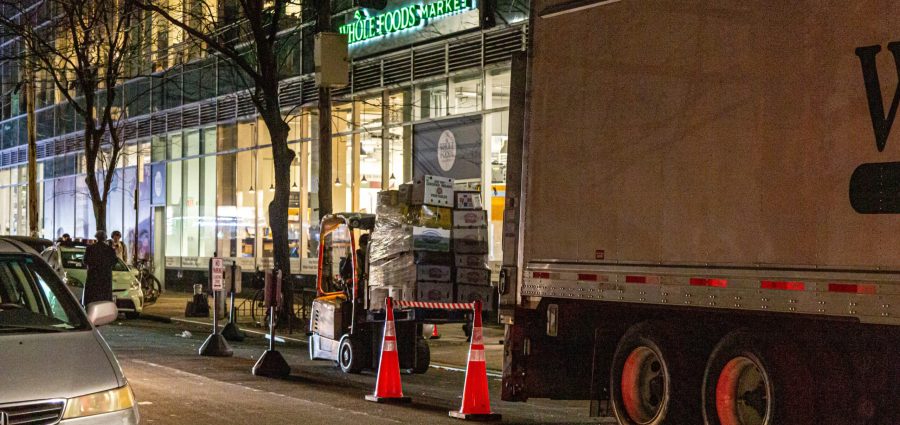
Lead photo from NYC Department of Transportation
New York City’s Department of Transportation announced Sept. 24 that it will distribute $5 million in Metropolitan Transportation Authority congestion pricing funding to help businesses shift truck deliveries away from the busiest daytime hours.
The funding supports NYC DOT’s Off-Hour Deliveries program, which encourages deliveries between 7 p.m. and 6 a.m. Up to 14 businesses will collectively receive more than $500,000 in the first phase, with the remaining incentive funding distributed in a second phase.
Applications for the second phase are open on a rolling basis. Businesses of all sizes are eligible, including existing voluntary program participants, though the incentives specifically target smaller businesses facing financial barriers to changing delivery schedules.
One-time payments reimburse eligible investments such as low-noise cargo handling equipment, building access improvements, security cameras and greener delivery methods, including electric vans and cargo bikes. Participants must commit to a year of off-hour deliveries and share data with NYC DOT. The agency also provides technical assistance.
“Congestion pricing is helping combat gridlock in more ways than one. New Yorkers are receiving more deliveries than ever before, so we will be using tolling revenue to make deliveries cleaner, safer, and more efficient,” NYC DOT Commissioner Mike Flynn said in a press release. “This incentive program will support local businesses and reduce the number of delivery trucks on our roads during busy daytime hours. It’s just one example of how we will be exploring new tools to help fight congestion across the city.”
NYC DOT said 27 known businesses currently conduct off-hour deliveries across more than 1,120 locations. Its goal is to reach 5,000 locations by 2040, shifting an estimated 62,000 daily trucks away from peak hours.
Separately, New York City officials are considering changes to how last-mile delivery facilities employ workers.
The proposed Delivery Protection Act, sponsored by City Council Member Tiffany Cabán and endorsed Aug. 10 by Mayor Zohran Mamdani, would establish licensing requirements for certain last-mile warehouses and distribution facilities, along with safety, training and worker protection standards.
The bill, Int. 0518-2026, would generally require facility operators to directly employ workers performing core delivery and warehouse services, subject to specified exceptions. Those services include delivering goods to consumers and sorting and handling packages within last-mile facilities.
The proposed requirements would challenge subcontracting arrangements used by companies such as Amazon and FedEx. Supporters say the legislation would improve worker protections and accountability, while opponents warn it could disrupt delivery networks and increase costs. The legislation remains a proposal, separate from DOT’s voluntary delivery incentive program.
Related Posts
-

Featured coverage from The Colorado Sun focused on how distributors are approaching artificial intelligence with…
-
Amazon’s latest ASCS expansion gives businesses access to LTL freight for shipments to warehouses, distribution…
-

New Census Bureau data analysis suggests wholesale trade continues to report AI usage below the…