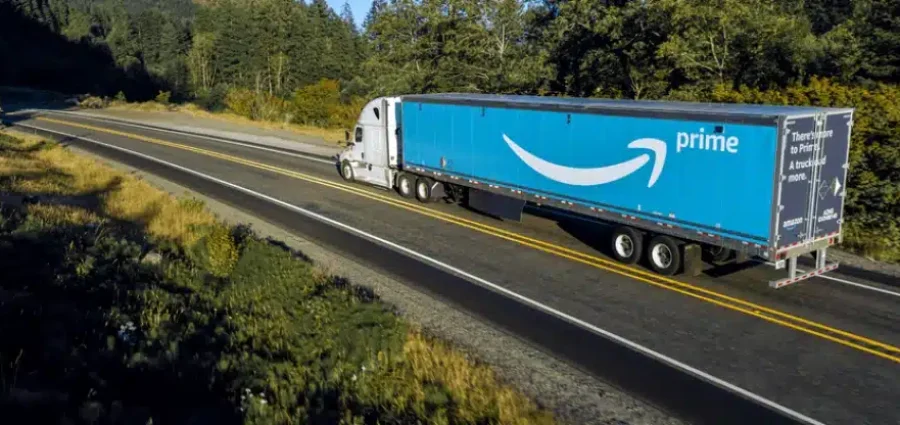
Amazon is expanding its Amazon Supply Chain Services platform with a less-than-truckload freight offering now available to all businesses.
The Seattle-based company announced June 10 that its LTL freight service has been expanded beyond its previous inbound-to-Amazon use case to support shipments to any destination, including third-party warehouses, distribution centers, retail partners and distributors.
The move builds on Amazon’s May 4 announcement that it had opened ASCS to all businesses — not just companies that sell through Amazon’s marketplace. ASCS includes freight, distribution, fulfillment and parcel shipping services, giving businesses access to logistics capabilities Amazon has built and refined over nearly three decades.
Amazon Opens its Logistics Network to All Businesses. Here’s What Distributors Should Know – May 4
Amazon said the expanded LTL service is designed for businesses moving freight by pallet, typically one to six pallets or 150 to 15,000 pounds. Customers can use the service to ship into their own warehouses, move goods between facilities or deliver to retail partners and distributors.
Amazon said its LTL offering is supported by more than 80,000 trailers, 24,000 intermodal containers and terminals across major U.S. metro areas. The company said Amazon LTL has served tens of thousands of Amazon selling partners and vendors since 2019, moving millions of pallets across its U.S. network last year.
“The feedback from Amazon selling partners using our LTL service was clear: the technology, visibility, and reliability were exactly what they needed — and they wanted to use it more broadly,” said Jim Ruiz, Director of Amazon Freight, in a news release. “Now Amazon LTL can move your freight wherever it needs to go, servicing destinations nationwide for businesses of all sizes.”
Amazon said the service includes next-day live pickup for orders placed by 5 p.m., same-day pickup through its drop trailer solution and standing daily pickups for high-volume shippers. Other features include real-time GPS tracking, proactive milestone updates, automated appointment scheduling, electronic proof of delivery, EDI integrations, cargo cameras and door sensors across its fleet.
MDM Analysis
For distributors, the announcement is another sign that Amazon is not treating logistics as a marketplace support function — it is turning logistics into a commercial infrastructure business.
That matters on two fronts. First, Amazon is raising the performance bar around freight visibility, booking simplicity, capacity access and shipment tracking. Customers that experience those capabilities in other channels may increasingly expect similar digital transparency from distributors, especially those that operate their own fleets or rely heavily on LTL for branch replenishment and customer delivery.
Second, the launch gives manufacturers, brands and even other distributors another option for outsourced or supplemental freight capacity. That could be useful for overflow, hard-to-serve lanes or new market entry, but it also increases the risk that logistics differentiation becomes more commoditized.
Distributors should watch three things: whether Amazon’s LTL pricing pressures incumbent carriers, how quickly ASCS gains traction outside Amazon’s seller base and whether customers begin benchmarking distributors’ delivery experience against Amazon’s technology-enabled freight model. The bigger implication is not LTL alone — it is Amazon continuing to bundle freight, fulfillment, data and delivery into a single external-facing platform.
Related Posts
-

The move positions the company as a full-service supply chain provider — raising the bar…
-

SBSI nets three Tennessee locations with the expansion, giving it 14 overall across the five…
-

Amazon estimates the new benefits aimed to support financial management, cybersecurity and HR could amount…