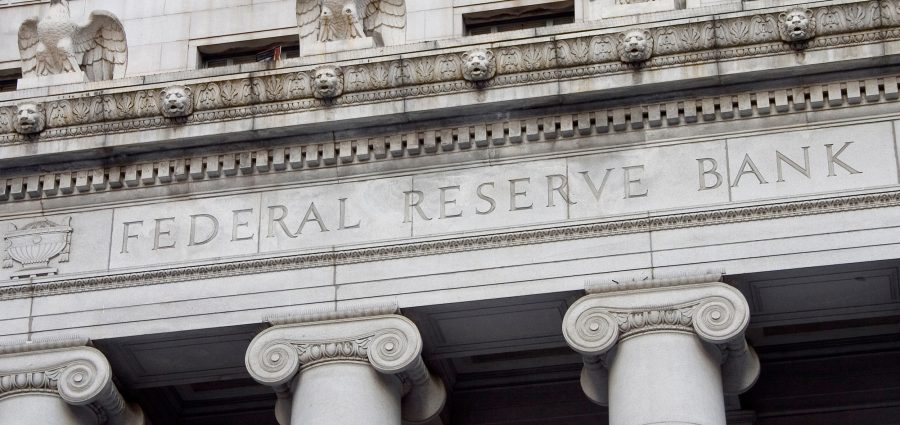
The Federal Reserve on April 29 held its benchmark interest rate unchanged, extending a pause that has been in place since late 2025 as policymakers continue to weigh inflation progress against uneven economic growth.
It leaves the rate at 3.5-3.75% and the effective funds rate at 3.64%. It hasn’t moved since the last quarter-point rate cut on Dec. 10, 2025.
In its post-meeting statement, the Federal Open Market Committee (FOMC) said recent indicators suggest economic activity has continued to expand at a moderate pace, while inflation remains somewhat elevated. The Committee reiterated its commitment to returning inflation to its 2% target, noting that risks to both employment and price stability remain in closer balance.
The Fed again signaled a data-dependent stance, indicating it will assess incoming economic data, evolving outlook and balance of risks before considering any adjustments to rates. The statement did not explicitly signal the timing of potential rate cuts, reinforcing expectations that policymakers are in no rush to ease policy despite moderating inflation trends.
Chair Jerome Powell, speaking after the decision, emphasized that while inflation has cooled from its peak, the Fed needs greater confidence that price pressures are sustainably moving lower before reducing rates.
The decision comes amid a mixed economic backdrop. Labor markets have shown signs of gradual cooling but remain resilient, while business investment and industrial activity — key indicators for wholesale distribution — have been uneven across sectors. Many forecasters continue to expect modest economic growth in 2025 with potential acceleration into 2026.
For distributors, the extended higher-rate environment continues to shape borrowing costs, capital investment decisions and customer demand patterns, particularly in interest-sensitive end markets such as construction and durable goods.
Notably, the April meeting is widely expected to be the final one led by Powell, whose term as Fed chair is nearing its end. In his FOMC press conference, he told reporters that he intends to stay on as a Fed governor after his chair term ends. His tenure has been defined by aggressive rate hikes to combat post-pandemic inflation, followed by a prolonged holding period as the central bank seeks to engineer a soft landing.
Related Posts
-

A largely neutral February likely gives the Federal Reserve more reason to maintain interest rates…
-

Meanwhile, core inflation's year-over-year rise slightly trailed economists' forecast.
-

Overall economic outlook grew more pessimistic vs. October, while expectations for incoming orders had a…