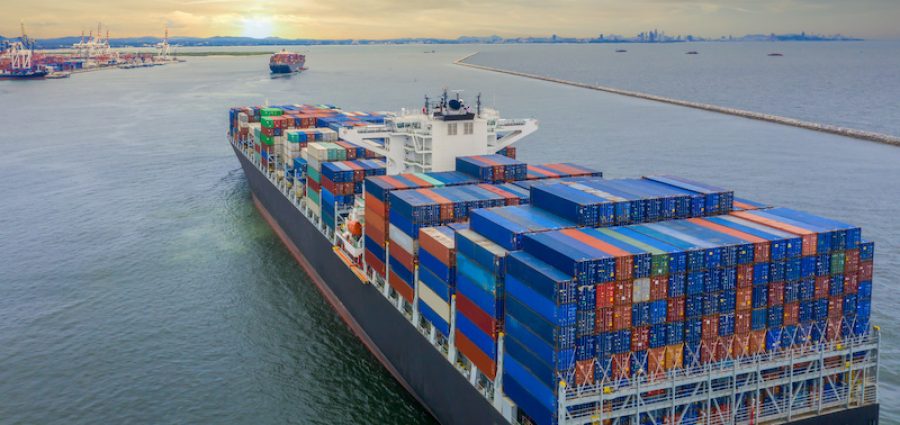
Global ocean container shipping rates declined for a second straight week in Drewry’s latest assessment, offering modest relief after a rapid increase that pushed key U.S. import routes to their highest levels since 2024.
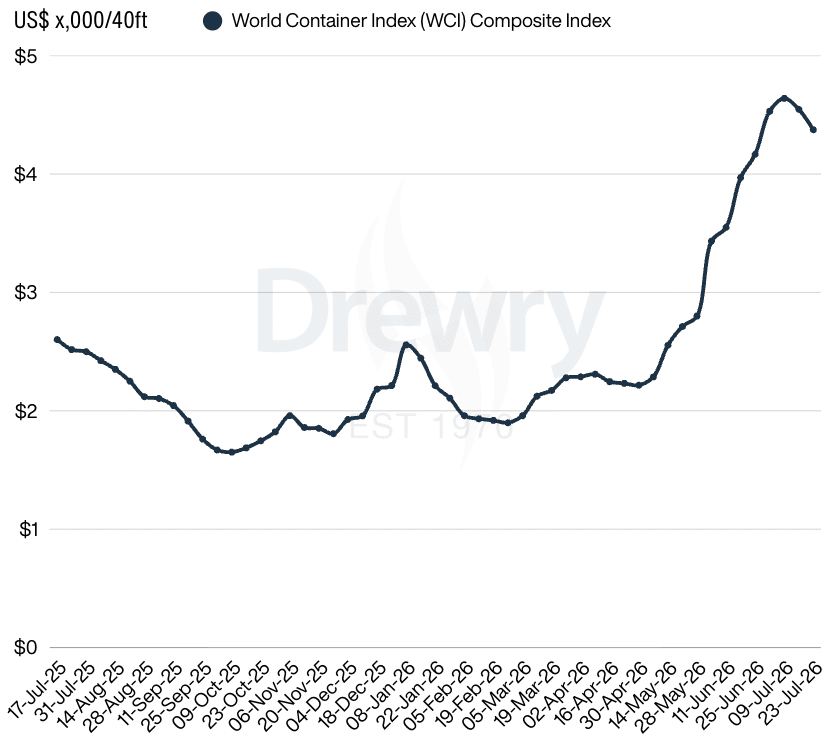
The Drewry World Container Index decreased 4% for the week of July 23 to $4,374 per 40-foot container. The index tracks spot rates across eight major East-West shipping lanes and is widely used as a benchmark by shippers and procurement teams.
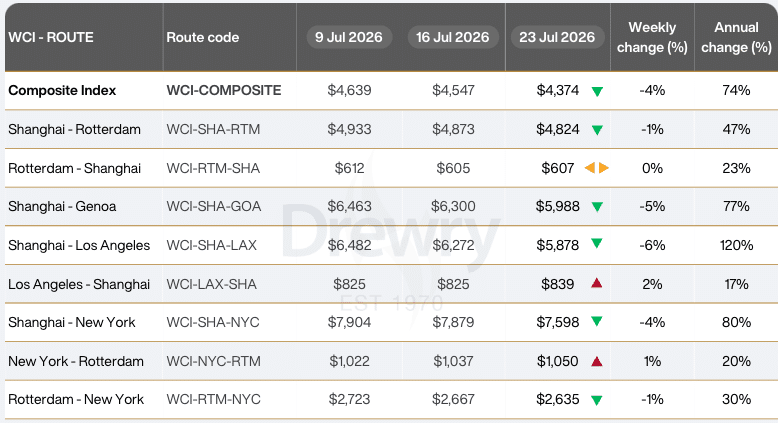
Rates from Shanghai to Los Angeles fell 6% from the previous week to $5,878 per container, while Shanghai-to-New York rates declined 4% to $7,598. Drewry attributed the decreases to easing demand and additional carrier capacity entering the transpacific market.
Despite the weekly declines, costs remain considerably above where they began the year. Shanghai-to-Los Angeles rates had reached $6,482 during the previous week after climbing for 10 consecutive weeks and nearly tripling from February. That marked the route’s highest rate since 2024 and its third-highest level since Drewry began tracking the market in 2011.
Drewry expects transpacific rates to remain stable during the coming week. Six blank sailings — canceled scheduled voyages used by carriers to manage available capacity — are planned for the route, down from nine during the current week. The change indicates carriers are deploying more capacity as the gap between available space and demand widens.
The preceding rate rally resulted from several overlapping pressures.
U.S. importers accelerated shipments to get products into the country before tariff deadlines and potential new import duties. The Port of Los Angeles handled more than 530,500 loaded inbound containers during June, a record for the month and a 13% year-over-year increase.
The earlier-than-usual peak shipping season coincided with inventory replenishment across Western economies. Meanwhile, continued vessel diversions away from the Red Sea have removed an estimated 10% to 15% of effective global capacity by extending routes and keeping ships at sea longer, according to Scan Global Logistics. Carriers responded to tight space by implementing general rate increases and peak-season surcharges.
Geopolitical conditions have added another layer of cost and volatility. Continued tensions involving the U.S. and Iran and uncertainty surrounding the Strait of Hormuz have increased fuel and operating risks. Several carriers have announced emergency fuel surcharges effective in August.
A St. Louis Federal Reserve analysis found that higher bunker fuel prices can raise container costs substantially, particularly for older, smaller vessels and longer voyages. Its estimates showed fuel costs for a 20-foot container traveling from China to the U.S. West Coast rising from $155 to $269 aboard newer ships following the early-2026 oil shock, with larger increases for older vessels.
MDM Analysis
For distributors, ocean rates can serve as an early indicator of future landed-product costs. Distributors may not purchase container capacity directly, but increased freight expenses can move through manufacturers, importers and suppliers before appearing in product pricing, surcharges or margin pressure.
The latest weekly declines suggest the sharpest phase of the rally may be easing as capacity increases and frontloaded demand subsides. However, rates remain elevated enough to signal that imported-product costs could face renewed upward pressure during the coming months — particularly if new tariffs, emergency fuel surcharges or additional shipping disruptions prevent freight markets from normalizing.
Related Posts
-

The DOJ charged four major container manufacturers — which combine to produce nearly all of…
-

The Fed held rates steady again on April 29, maintaining a wait-and-see stance on inflation.…
-

The Fed held rates steady again in its June meeting, maintaining its benchmark range at…