U.S. consumer inflation cooled sharply during June as falling gasoline prices offset continued increases for food and shelter.
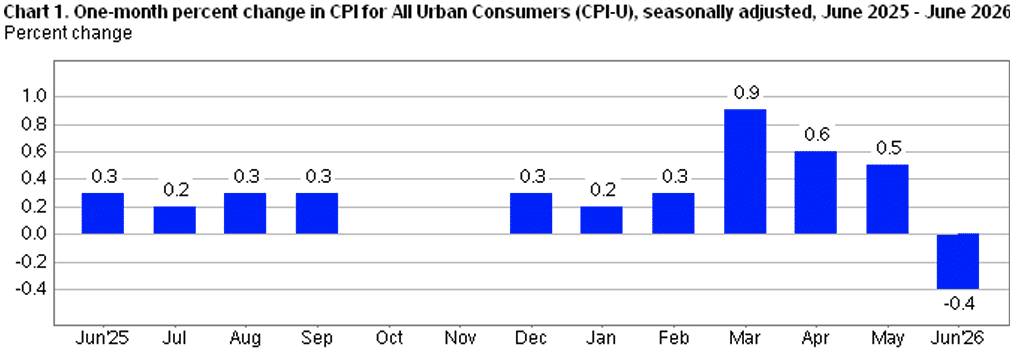
Data released July 14 by the Labor Department showed that its Consumer Price Index decreased 0.4% from May — the largest monthly decline since April 2020 — after rising 0.5% during the previous month. Consumer prices increased 3.5% year-over-year, down from May’s 4.2% pace and below economists’ expectations of 3.8%.
June’s monthly decline was predominantly driven by a 5.7% drop in the energy index, which had increased 3.9% in May, 3.8% in April and 10.9% in March. Gasoline prices fell 9.7% during June, while electricity prices declined 1.0%. Natural gas prices increased 0.5%.
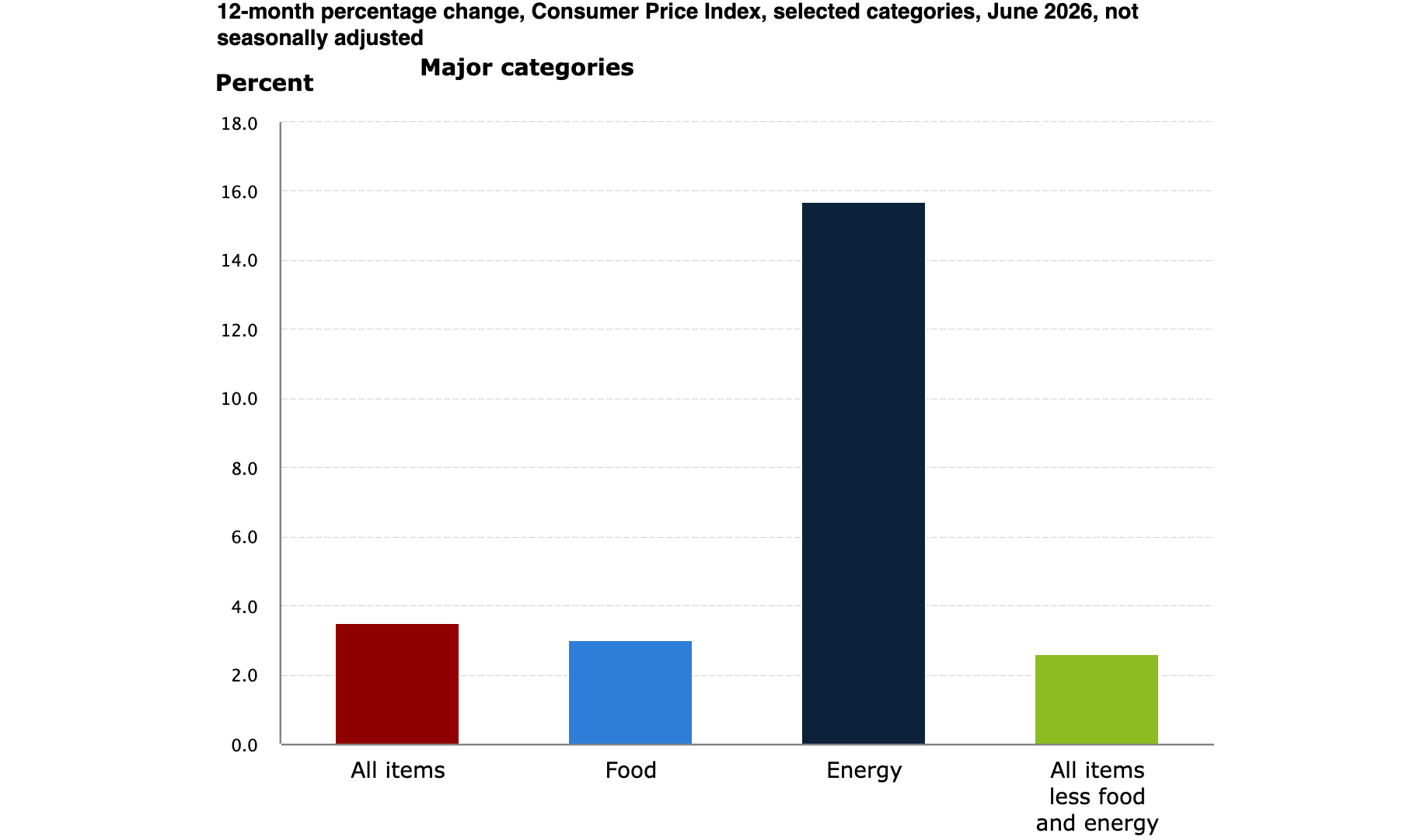
Despite the monthly retreat, energy prices remained 15.7% higher than a year earlier, including a 26.7% annual increase for gasoline and a 42.9% jump for fuel oil.
Meanwhile, core inflation, which excludes volatile food and energy categories, was unchanged month-over-month after rising 0.2% in May. Core prices increased 2.6% year-over-year, easing from May’s 2.9% pace that was a seven-month high.
Shelter prices rose 0.1% during June — their smallest monthly increase since January 2021 — while food, food at home and food away from home each increased 0.2%. Declines were also recorded for motor vehicle insurance, communications, apparel, medical care and used vehicles.
The food index increased 3.0% year-over-year, while shelter prices rose 3.3%. Airline fares remained a notable source of annual inflation, jumping 26.5% from June 2025.
June’s Producer Price Index report is set for release on July 15.
May U.S. Wholesale Sales Accelerate, Far Outpacing Inventories – July 8