
The adoption of robotics and artificial intelligence has had little impact on the number of workers employed, according to newly-released data from the U.S. Census Bureau.
A survey of employer businesses (those with at least one paid employee) found that between 2020 and 2022 the number of workers did not change overall after adopting AI, specialized software, robotics, cloud-based tech or specialized equipment.
In the Store: MDM’s 2025 Economic Outlook Report (Premium access)
In fact, when these technologies did impact the number of workers, all (except robotics) were more likely to increase the number of workers. There was no statistically significant difference between the number of workers increased (9.5%) or decreased (8.1%) by robotics.

Other key findings of the bureau’s Annual Business Survey related to technology include:
- Technology has had no impact on worker skill level: AI, specialized software, robotics, cloud-based tech or specialized equipment had little or no impact on worker skill level for most businesses. Only 3.9% of businesses using robotics and 3.3% of businesses using AI reported workers’ skill level decreased — the largest shares in this category.
- Quality improvement was the motivating factor for most technology implementations: Improving the quality or reliability of processes or methods was the most common motivating factor for businesses to adopt cloud-based technology (51.8%), specialized software (49.8%) and AI (45.8%) between 2020 and 2022.
- AI use increased from 2021 to 2022: Businesses used AI at a higher rate (68%) than other technologies from 2021 to 2022.
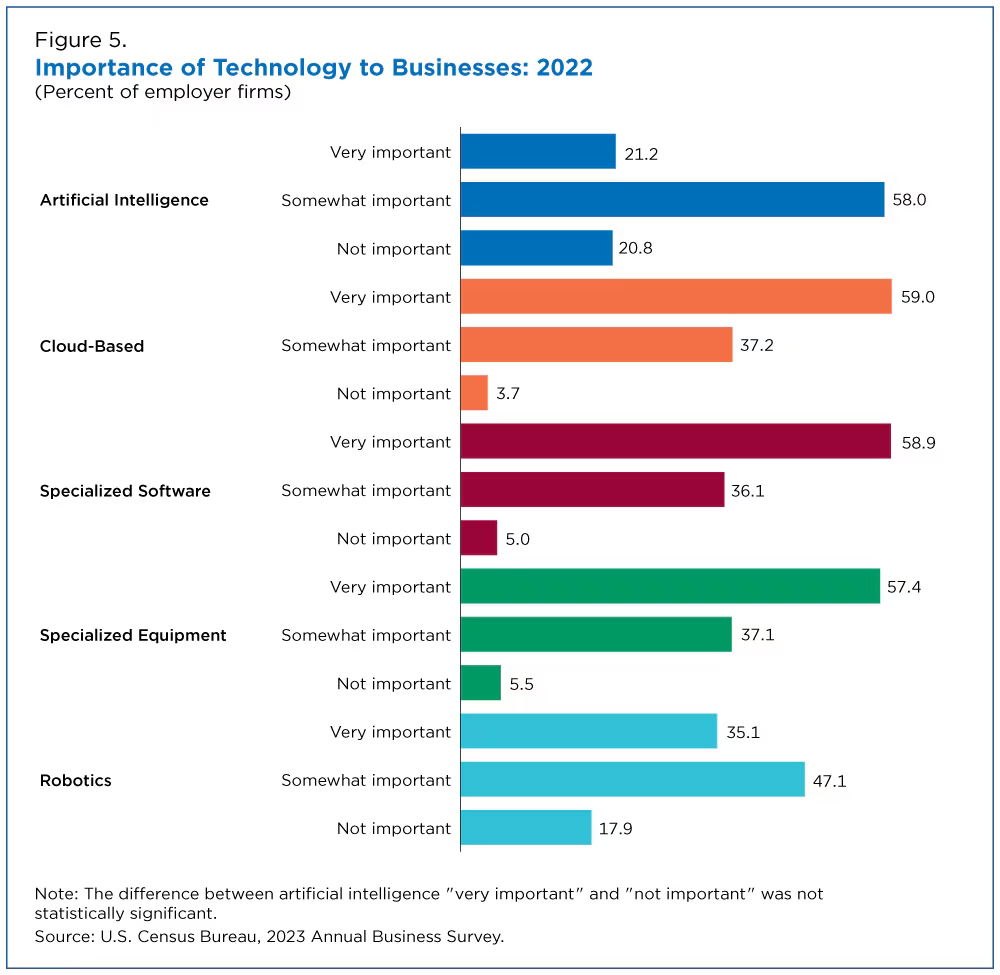
- Cloud-based and specialized software are the most important technologies for improving business processes and methods: Most businesses reported cloud-based technology (59%), specialized software (58.9%) and specialized equipment (57.4%) were “very important” to their processes or methods.
MDM’s 2Q25 MarketPulse Report (Premium access)
Read more about the results of the ABS survey here.
Editor’s Note: How to Look at the Data
This analysis includes data from all business owners who employ at least one person, and was processed using 2022 data (the most current results available). While this data does include some businesses in the distribution and manufacturing space, it does not represent how the distribution sector specifically feels about technology, nor does it reflect current sentiments. Still, distributors can use these results as a way to understand the greater trends of technology and how they are widely embraced across industries.
It’s important to acknowledge the time lag here, as the momentum behind AI adoption across all industries received a significant boost upon OpenAI’s release of ChatGPT-4 near the end of 2022. So, it’d be interesting to see how these job stability figures would change — if at all — if they were as of the end of 2024 or even more recent. Regardless, AI was already infused into numerous technology tools by 2022, making this Census Bureau survey statistically relevant.
As the author of the report, Census Bureau Business Analysis Rachel Arledge, put: the findings are contrary to conventional wisdom that certain jobs are replaced by technology. According to these results, businesses are finding a place for technology without sacrificing their employees. At least, not yet.
Related Posts
-

See our breakdown of M&A activity by product category, the latest EBITDA trading multiples for…
-

Our first quarter MarketPulse shares a wealth of data from the 1Q25 Baird-MDM Industrial Distribution…
-

ABB announced plans to spin off its robotics division in its largest portfolio shift since…