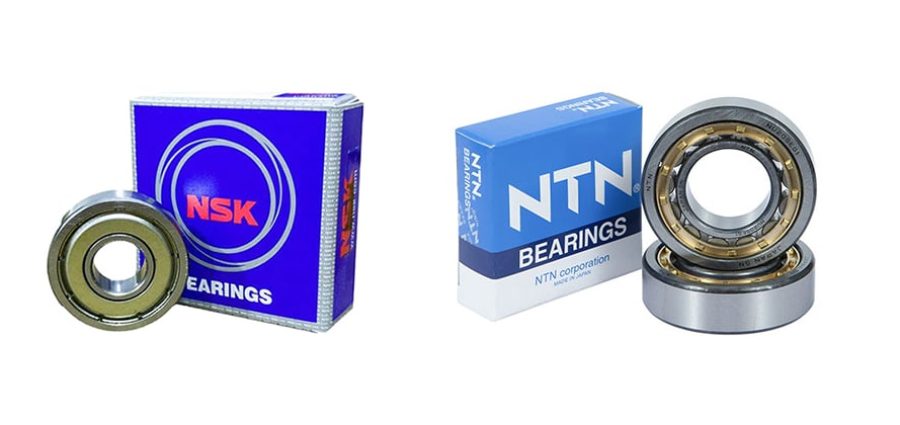
Japanese bearings and precision technology manufacturers NSK Ltd. and NTN Corp. have signed a memorandum of understanding to pursue a business integration through the establishment of a joint holding company, the companies announced May 12.
The proposed integration would combine two of Japan’s largest bearing manufacturers and create one of the world’s largest bearing and power transmission suppliers.
The companies said the move is intended to strengthen competitiveness amid changing global market conditions, including increasing electrification in automotive markets, intensifying competition and ongoing pressure to improve operational efficiency and profitability.
According to the MoU, NSK and NTN will begin formal discussions toward creating a jointly owned holding company through a share transfer process. The companies plan to negotiate governance structure, ownership ratios, management integration and operational synergies over the coming months. The deal remains subject to definitive agreements, shareholder approvals and regulatory clearances.
Tokyo-based NSK is one of the world’s largest manufacturers of bearings, automotive products and precision machinery components. Founded in 1916, the company produces bearings, linear motion products and steering systems used across industrial, automotive and aerospace applications. NSK reported consolidated revenue of approximately ¥1 trillion (about $6.5 billion USD) for its latest fiscal year.
Osaka-based NTN, founded in 1918, manufactures bearings, constant-velocity joints and precision equipment serving automotive, industrial and aftermarket customers worldwide. The company has a broad global manufacturing and distribution footprint across Asia, Europe and North America. NTN generated annual revenue of roughly ¥850 billion (about $5.5 billion USD) in its most recent fiscal year.
Combined, the two companies would represent annual revenue approaching ¥1.9 trillion (roughly $12 billion USD), creating a major global force in bearings, driveline and motion-control products. The combined scale would significantly expand the companies’ global manufacturing capacity, product breadth and customer reach across industrial and automotive markets.
The companies said they expect the integration to create operational efficiencies through procurement optimization, manufacturing rationalization, technology sharing and coordinated research and development. Both companies also cited the need for larger-scale investment capabilities as electrification, automation and advanced mobility technologies reshape end markets.
The memorandum does not yet constitute a definitive merger agreement, and both companies emphasized that discussions remain ongoing. Additional details, including transaction structure and timing, are expected to be disclosed as negotiations progress.
Related Posts
-

Amazon estimates the new benefits aimed to support financial management, cybersecurity and HR could amount…
-
PMA's latest business conditions report showed a considerable downgrade in near-term optimism.
-

It’s one of a few visual changes you’ll notice around the MDM website, but our…