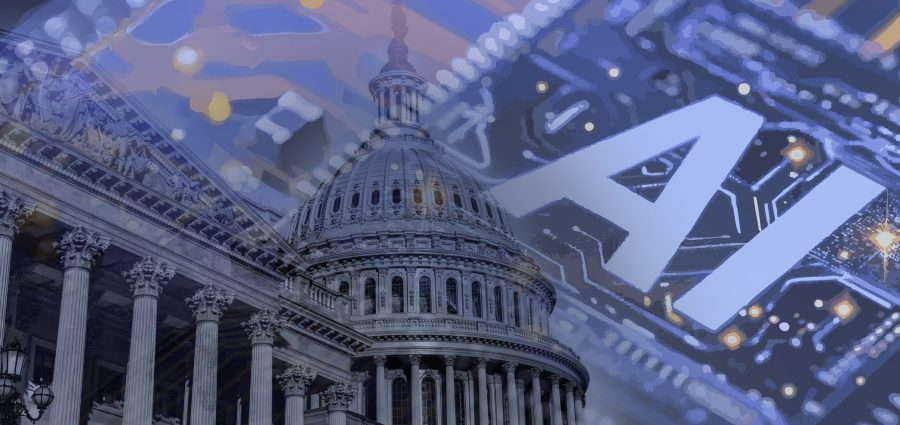
The Trump administration on March 20 unveiled a national legislative framework for artificial intelligence that calls on Congress to establish a single federal standard governing AI development and deployment across the U.S. economy.
Outlined in a White House press release, the proposal seeks to streamline what officials describe as a fragmented and increasingly burdensome patchwork of state-level AI regulations. The administration argues that inconsistent rules across states risk slowing innovation, increasing compliance costs and limiting the global competitiveness of U.S. companies.
At the core of the framework is a push to preempt state and local AI laws with a unified federal approach. The administration said this would provide “regulatory clarity and certainty” for businesses developing or deploying AI-enabled technologies, while ensuring consistent safeguards nationwide.
The proposal also emphasizes accelerating AI adoption across key sectors of the economy. It calls for policies that encourage rapid deployment of AI tools in industries such as manufacturing, logistics, healthcare and energy — areas the administration views as critical to productivity gains and economic growth.
In addition, the framework highlights the need for risk-based oversight rather than broad restrictions. It promotes tailoring regulations to specific use cases and levels of risk, rather than imposing sweeping constraints that could hinder innovation. The administration positioned this approach as a contrast to more prescriptive regulatory models seen in some states and international markets.
The release also underscores national security and global competition as central drivers. It frames AI leadership as a strategic priority, particularly in relation to China, and calls for policies that ensure the U.S. remains at the forefront of AI development.
While the announcement outlines broad principles, it stops short of detailing specific legislative language. Congressional action would be required to codify any federal preemption of state AI laws and to establish the proposed regulatory framework.
Why This Matters for Distribution
For wholesale distributors and the technology providers that serve them, a unified federal AI standard would represent a meaningful shift in the operating environment.
Today, distributors deploying AI-powered tools — from demand forecasting and pricing optimization to warehouse automation and customer service — must navigate a growing patchwork of state-level rules. That complexity extends to software vendors embedding AI into ERP, CRM and eCommerce platforms used across multi-state operations.
A single federal framework could significantly reduce compliance friction, particularly for distributors operating nationally. It would simplify vendor selection, contract structuring and internal governance by replacing state-by-state requirements with one consistent set of rules.
At the same time, accelerated AI deployment aligns with broader industry trends. Distributors are increasingly investing in AI to drive margin improvement, pricing precision and operational efficiency — themes that have been central across recent MDM MarketPulse and industry surveys.
However, the impact will depend heavily on how any legislation balances innovation with oversight. A lighter-touch, risk-based framework could encourage faster adoption and vendor innovation. Conversely, if federal standards introduce new compliance burdens, they could reshape how distributors evaluate AI investments.
Either way, the proposal signals that AI policy — and its downstream implications for distribution — is moving toward the center of the national economic agenda.
Related Posts
-

In a Truth Social post, Trump announced the U.S. will levy new tariffs on imported…
-

The U.S. Supreme Court struck down Trump's tariffs with a 6-3 decision, though the president…
-

This category can only be viewed by members. To view this category, sign up by…