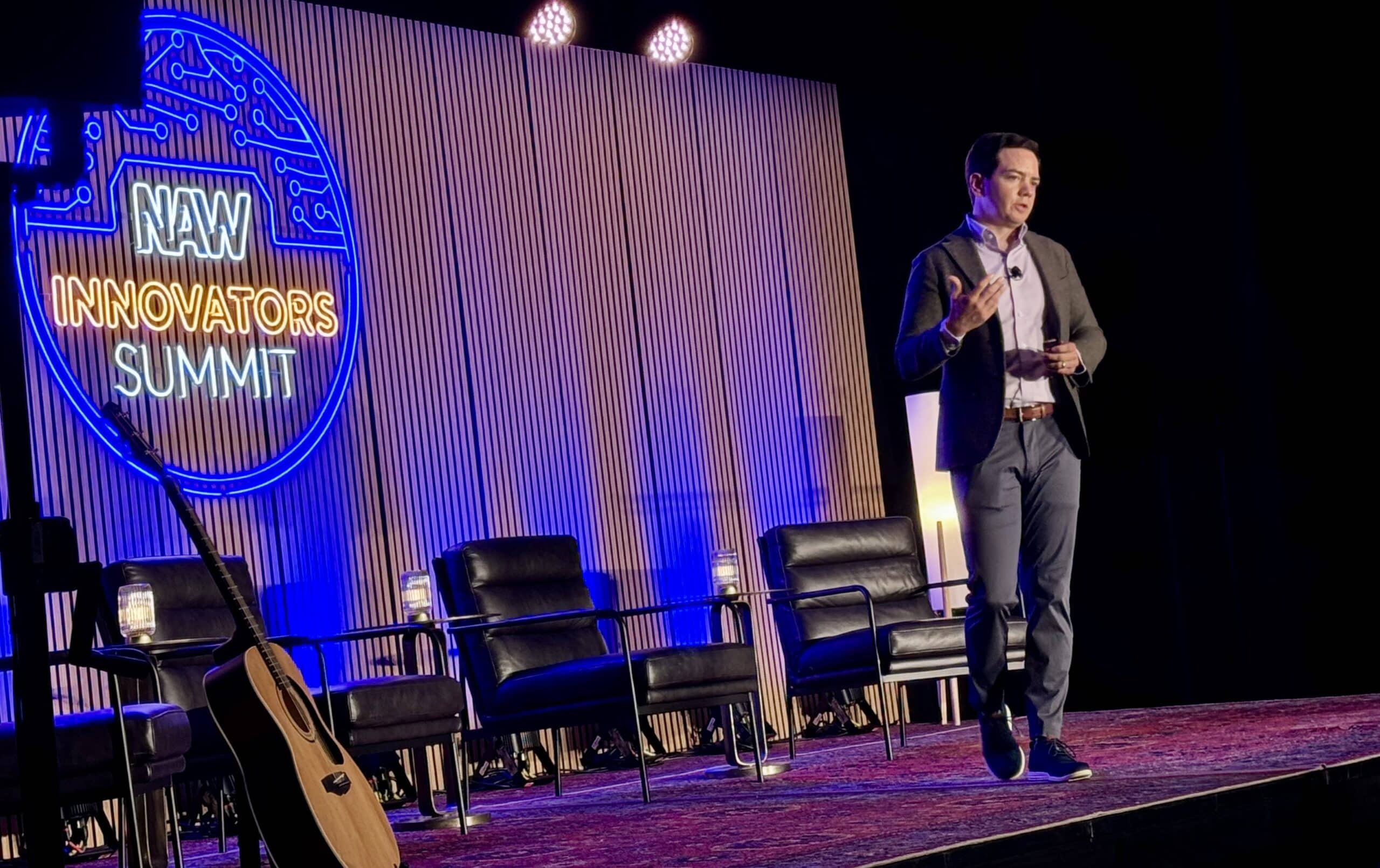
Artificial intelligence was difficult to separate from almost any technology conversation at NAW’s 2026 Innovators Summit.
That was less because AI occupied its own distinct corner of the event and more because it has increasingly become embedded across the technology platforms serving wholesale distribution. Solutions represented at the Sept. 16-18 event addressed product data, field sales, shipping, order entry, returns, eCommerce search, profitability analysis, supply chain planning and back-office exception management, among other operational areas.
But if AI was seemingly everywhere, the conversations surrounding it reflected a market that is becoming more discerning about what distributors expect from the technology.
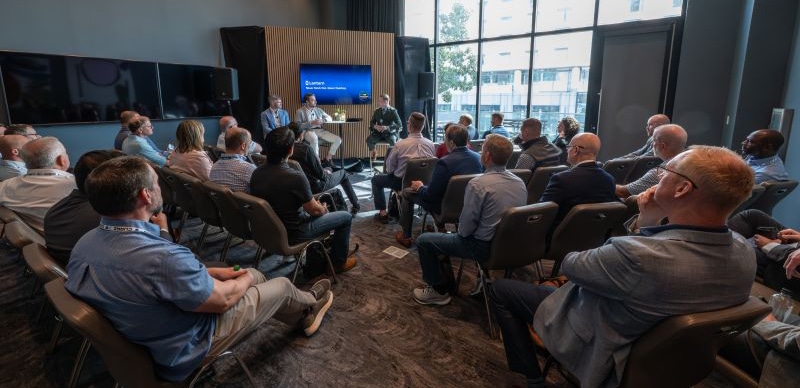
The fifth annual Innovators Summit, held at The Joseph in downtown Nashville, was designed to help distributors make those evaluations directly. The event brought together distribution executives and 26 technology innovators for a combination of mainstage discussions, innovator presentations, networking and private appointments.
Through the event app alone, distributors and innovators booked 159 private 20-minute appointments — 3,180 total minutes of scheduled one-on-one conversations — with additional meetings taking place outside the app.
“The strongest feedback I heard was that the Summit helped leaders cut through the noise,” NAW Chief Innovation Officer Bart Tessel said. “Distributors do not need more technology for technology’s sake; they need a clearer understanding of which investments can solve meaningful business problems and create measurable value.”
Bottom line: the event served as the intersection of industry conversations, innovators driving technology transformation and direct access to them for distributors looking to turn curiosity into informed action.
AI Moves Beyond the Demo
That distinction — from curiosity to action — was evident in how AI was discussed throughout the Summit. The question is increasingly less about what AI is capable of doing and more about what it can do for margins, working capital, customer experience and decision-making.

“The distribution industry’s AI conversation is becoming much more disciplined,” Tessel added. “Leaders are moving beyond demonstrations and asking tougher questions about margin, working capital, customer value, governance and adoption.”
That progression is what the Summit is intended to accelerate: moving from excitement about AI’s possibilities toward greater confidence about where and how to invest.
This evolution also tracks with NAW’s newly released inaugural 2026 AI Adoption Index, which establishes an annual benchmark for how distributors are adopting, scaling and generating value from AI.
Based on 302 respondents, the Index found that the clearest AI value signal so far is in back-office efficiency: 47.4% of respondents assessing business impact reported a moderate or significant effect there, making it the strongest impact area measured. At the same time, the research showed that the industry has moved beyond AI curiosity without yet reaching broad operational scale.
Download NAW’s 2026 AI Adoption Index here.
NAW members also have access to an exclusive AI Adoption Index dashboard that lets them sort and toggle between the study’s results by revenue band and industry sector — letting members view the results in a manner most applicable to their situation.
Start With the Business Case
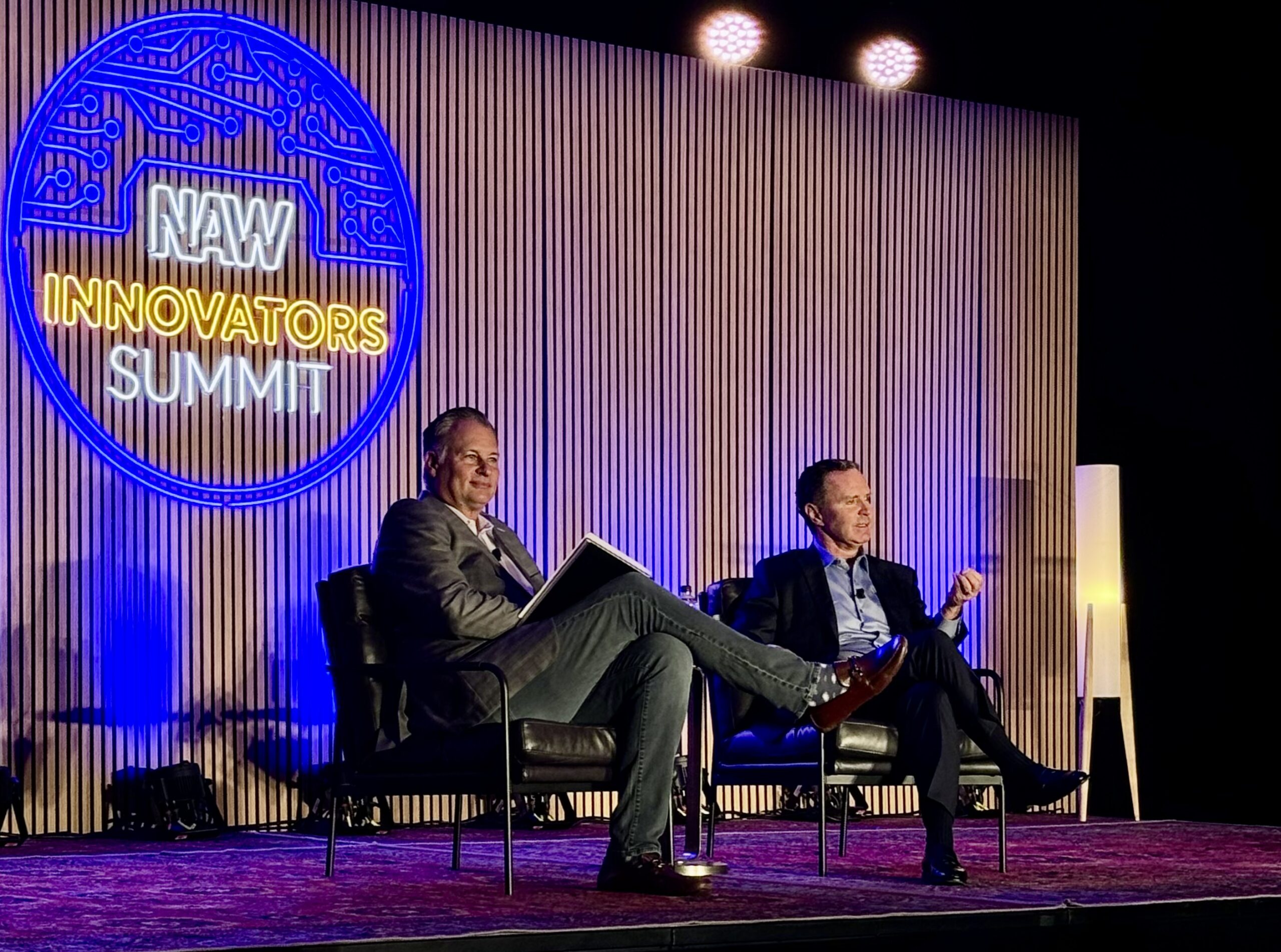
The emphasis on value was reinforced during Day 2’s mainstage session in which Graybar Vice President of AI Ed Fenton and CFO David Meyer joined Deloitte Principal Hamid Ali for a discussion spanning ERP modernization, data foundations, AI-enabled capabilities and the operational changes needed to turn technology investment into measurable results.
One takeaway was straightforward: an AI initiative without a clear business case remains experimentation, regardless of how sophisticated the technology is.
That does not necessarily mean distributors must complete a sweeping ERP or technology transformation before they can create value. Targeted initiatives can run alongside larger modernization efforts, creating nearer-term returns while a longer transformation continues.
“One message came through clearly in Nashville: technology creates value only when it changes a process, improves a decision, strengthens the customer experience or produces another measurable business outcome,” Tessel said. “The companies making progress are starting with the business case, bringing their people into the transformation and treating adoption as seriously as the technology itself.”
That also raises an important distinction between efficiency and effectiveness.
Automating manual work certainly has value. But some of the larger opportunities may come from technology that helps distributors make better pricing and inventory decisions, improve sales execution or deliver stronger customer outcomes.
The CIO Questions Are Changing
A second Thursday mainstage conversation took the discussion deeper into AI strategy. A panel featuring Dot Foods CIO Brian LeDuc, ABC Supply Vice President of Digital, Data and Analytics Larry Sulivan and Augment President Alex Moazed focused on where distributors should begin with AI, the evolving build-versus-buy equation, security and governance and what successful implementation looks like inside a distribution company.
Those are markedly different questions from simply asking which AI tools are available, like the industry was doing back in 2023-2024.
And even as the technology advances, adoption remains a people and process challenge. New technology creates lasting value only when employees trust it, workflows change around it and companies make the benefit clear to the people expected to use it.
“A consistent lesson throughout the Summit was that transformation is ultimately a people discipline,” Tessel said. “The technology can be impressive, but lasting value depends on involving employees, redesigning workflows and making the benefit clear at every level of the organization.”
MDM has heard time and again in 2026 from both distributors and technology providers that the most successful implementations are built with the business and the people doing the work — not simply delivered or dictated to them.
Mainstage Conversations Ground the Matchmaking
Those discussions helped provide context around the portion of Innovators Summit that attendees outside the meetings do not see.
Day 1 held “An Evening with Innovators,” during which 12 returning technology innovators showcased recent product developments, research and solutions targeted at evolving distribution challenges.
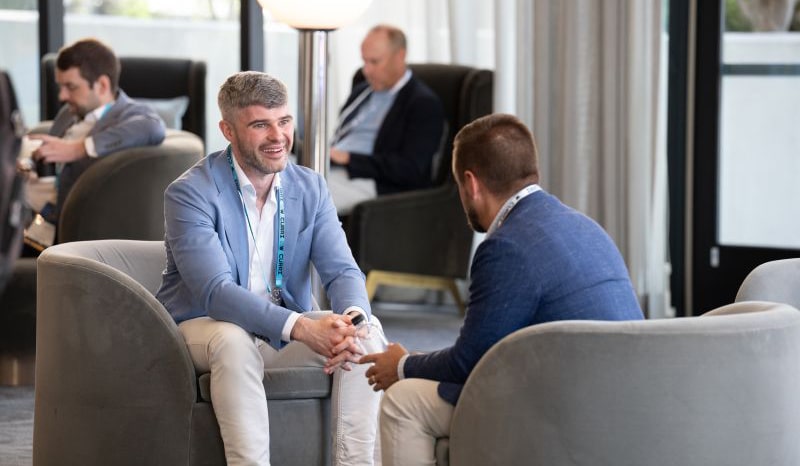
On Day 2, attendees moved from the morning mainstage sessions into moderated innovator pitches and, later, private appointments. Those closed-door, 20-minute meetings were specifically designed to put distributor decision-makers directly across from technology CEOs to discuss whether a solution could fit their companies.
The event widened its lens again Friday morning with a fireside conversation featuring 3M Chairman and CEO Bill Brown and ORS Nasco President and CEO Kevin Short, who also serves as Treasurer of the NAW Board of Directors. Their discussion examined leadership, manufacturer-distributor partnerships and how those channel relationships continue to evolve.
Together, those public discussions grounded an event where much of the value intentionally happened away from the stage.
Shortening the Distance to Execution
That format is part of what separates Innovators Summit from larger industry conferences where distributors — typically one product sector at a time — may encounter dozens or hundreds of technology companies on an exhibit floor.
The goal here is not merely exposure to technology. It is direct access that lets distributor executives move quickly from asking “What does this do?” to “Could this work in our business?”
“The Innovators Summit is designed to shorten the distance between innovation and execution,” Tessel said. “The value is not only discovering what is new; it is having the conversations and building the relationships that help leaders decide what is relevant, actionable and right for their organizations.”
That may be an increasingly important function as AI becomes embedded throughout the distribution technology landscape. The number of potential tools and applications continues to multiply. The harder job for distributors is deciding which problems deserve attention, which technologies fit their operating environment and which partners can help turn those investments into sustainable business value.
NAW’s Innovators Summit will return to The Joseph in Nashville on Sept. 13-15, 2027.
Related Posts
-

NAW presented its case challenging Oregon’s packaging EPR law during a July 13-17 federal trial…
-

Developed with the AI Applied Consortium, NAW’s new AI Governance Architecture gives distributors a practical…
-

This comprehensive NAW 3Q26 Forecast Report is a guide to the U.S. wholesale distribution economy,…