
Organizations across the world are racing to modernize supply chains that were designed for an era defined by manual processes, fragmented tools, and limited visibility. Moving from these traditional models to fully autonomous and data-driven operations requires a structured roadmap that aligns systems, people and long-term strategy. As global logistics become more complex and customer expectations continue to accelerate, companies that embrace autonomy as a core operating principle position themselves for competitive advantage.
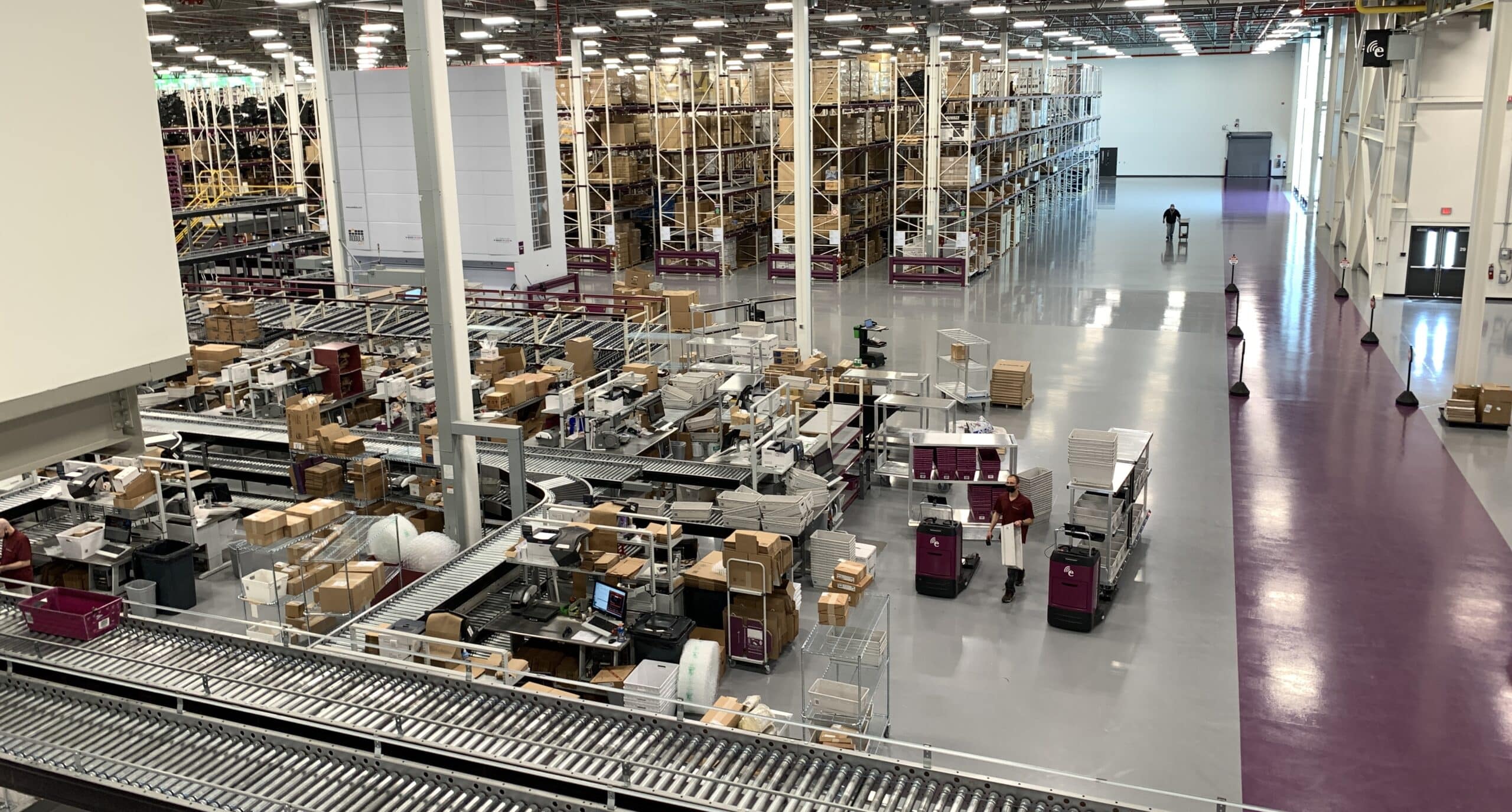
In my career, I spearheaded the modernization of a high-volume apparel distribution center’s supply chain, transitioning from manual processes to a robotic fulfillment system in the United States. My responsibilities included designing comprehensive solutions, creating warehouse procedures and linking the Warehouse Management System with autonomous robots. I worked closely with diverse teams to establish scalable workflows that ensured human operators remained essential through a human-in-the-loop autonomy framework, emphasizing resilience, peak-season efficiency and adaptability.
These initiatives resulted in significantly reduced travel times, enhanced order cycle performance and consistent output even during periods of high demand. Most importantly, the transformation introduced an operating model equipped for future advancements, enabling the gradual integration of automation and AI while safeguarding operational flexibility and staff adaptability.
Building the Foundation with Visibility, Data and Intelligent Automation
The journey begins with visibility. Many organizations still struggle to answer foundational questions about inventory levels, lead times, cost drivers, and demand patterns. Manual reporting, departmental silos, and outdated tools limit the ability to capture accurate, real-time insights. The transition to autonomy requires eliminating these blind spots. Centralized data systems allow teams to standardize information across procurement, manufacturing, distribution, and customer operations. When data becomes consistent and accessible, organizations can begin to trust it and use it as the foundation for decision-making.
For instance, in a large fulfillment network, operational data from OMS, WMS, TMS and WCS were dispersed across several transactional systems. Each platform produced individual reports with varying timestamps, identifiers and data definitions, presenting significant challenges to achieving comprehensive end-to-end visibility across order management, warehousing, automation and transportation processes.
I addressed this issue by architecting and deploying a centralized data lake solution. I oversaw the establishment of a standardized event schema for essential entities such as order ID, shipment ID, inventory unit, location and automation event. Data pipelines leveraging API integrations and event streaming were created to aggregate data from various systems into the central repository systematically.
The data lake facilitated the transformation of raw information into conformant analytical layers, allowing for time-synchronized, system-independent insights into supply chain operations. Advanced visualization and BI tools were integrated to deliver role-specific dashboards, detailing order lifecycle, warehouse efficiency, automation status and transportation metrics within a unified timeline.
This robust architecture converted fragmented operational records into actionable intelligence, empowering proactive exception handling, expedited root-cause analysis and more informed, strategic decision-making throughout the supply chain.
Once data is unified, the next step is intelligent automation. Automation does not simply replace repetitive tasks; it refines the way decisions are made. Rules-based automation can streamline processes such as order management, transportation planning, and warehouse operations, reducing manual intervention and minimizing human error. As the system matures, predictive analytics becomes essential. By analyzing patterns across historical records, real-time inputs and external variables, predictive models identify risks before they occur, such as demand surges, supplier delays or quality issues. These capabilities allow supply chains to operate with precision and agility even in volatile environments.
Integrating Systems and Introducing Advanced Technologies
The move toward autonomy continues with the integration of connected systems. Disconnected tools create delay, duplication, and operational friction. Integrating enterprise resource planning systems with warehouse management systems, transportation systems and demand planning platforms allows information to flow without interruption. This integration supports end-to-end optimization, where a change in one part of the chain automatically triggers adjustments throughout the network.
The integration of systems significantly enhances supply chain processes by centralizing financial, inventory, and operational data. Strong connections between ERP software and warehouse management enable organizations to monitor inventory, track orders, and manage shipments in real time, while maintaining accurate financial records and regulatory compliance. Streamlined workflows diminish reconciliation efforts, increase inventory precision, reduce order-to-cash cycles and support robust planning and forecasting activities. ERP integration consolidates previously segmented operations into a unified enterprise-wide strategy, improving efficiency, transparency and informed decision-making throughout the supply chain.
When ERP is seamlessly integrated with OMS, WMS, and TMS, actions taken within one system are instantly reflected across others, thereby eliminating delays, data inconsistencies and manual reconciliations. Warehouse inventory movements automatically update financial and planning records, shipment execution provides precise billing and accruals, and order commitments accurately represent actual operational capacity.
As organizations advance, they begin to introduce autonomous technologies such as intelligent routing, automated quality checks, and robotics. These tools strengthen consistency and increase throughput, especially in environments where labor constraints or fluctuating workloads present challenges. Autonomy is about elevating people to more strategic work while giving the supply chain a self-regulating foundation that reduces variability and strengthens performance. You have seen how teams respond once they no longer carry the burden of manual tasks, and how autonomy increases capacity for innovation.
Over time, operational processes progress beyond initial adaptation to automation, ultimately achieving sustained increases in productivity as automated systems become integrated into daily activities. Based on my experience managing automation initiatives, the most consequential improvement is not merely accelerated throughput, but also the enhanced consistency of operational performance over extended periods. As teams gain confidence in automated, system-directed workflows, the frequency of disruptions stemming from manual interventions declines substantially.
Frontline positions transition from repetitive manual work to focusing on exception management, quality assurance, and continuous process enhancement. Supervisors allocate less effort to resolving urgent issues and concentrate more effectively on optimizing workforce allocation and workflow efficiency using actionable system insights. This evolution supports long-lasting productivity gains that are neither seasonal nor dependent on fluctuations in volume.
Driving Adoption, Managing Change and Delivering Measurable ROI
A critical factor in this transformation is change management. Technology alone does not create an autonomous supply chain; people do. Adoption depends on trust, clarity, and training. Employees need to understand why new systems matter, how their roles will evolve, and how these tools reduce complexity rather than create new burdens. Leaders who communicate transparently and invest in skill development accelerate adoption. Those who neglect these steps often face resistance that slows progress. In a large supply chain overhaul, getting employees on board turned out to be tougher than handling the new technology. When teams started using updated workflows, their productivity dropped at first, leading the organization to focus on organized change management instead of just pushing ahead with execution. Frontline supervisors and operators participated in design reviews to validate processes and identify issues early. Training was tailored to roles and focused on demonstrating efficiencies. Regular feedback loops allowed user input to inform system updates.
Soon, resistance dropped, operators relied on the system, supervisors faced fewer exceptions and productivity surpassed previous levels. This showed that strong change management not only supports adoption but also drives lasting performance gains.
Balancing investment with measurable ROI is another essential component. Many companies fear large-scale transformation because they worry about cost, disruption, or uncertain benefits. The solution is a phased approach. Start with foundational systems such as data standardization and integration, then expand into automation and advanced analytics. With each phase, measure specific outcomes such as fulfillment accuracy, cycle time reduction, forecast precision or labor efficiency. These early wins generate momentum and build confidence in the broader transformation.
The final stage is autonomy at scale, where the supply chain evolves from reactive to self-governing. Systems continuously analyze performance, adjust workflows, and optimize capacity without human intervention. Decision makers shift from managing operations to orchestrating strategy. Autonomy allows supply chains to adapt instantly to market shifts, supply disruptions, and unexpected events, making organizations more resilient and more competitive.
Related Posts
-

From smarter inspections and technical support to demand planning, sourcing, and inventory optimization, this article…
-

The new facility will allow White Cap to simplify its operations and place its broad…
-

The news comes just two days after the company announced the opening of a large…