In today’s economic climate of hard-hitting tariffs, record-high diesel prices, and global trade uncertainty, distribution-driven sectors like building supply and food and beverage are feeling the bottom-line squeeze. The situation is precarious: geopolitical unrest, tariff wars, and labor shortages are driving up costs as uncertainty abounds.
In the construction industry, for example, input costs for new non-residential construction rose 7.1% from July 2025 to July 2026, with numerous materials prices escalating to multi-year highs. The cost of everything from metals, diesel fuel, and paving mixtures to lumber, plywood, and construction plastics has risen year-over-year, as contractors continue to face uncertainty about future material costs. Meanwhile, construction spending fell 3.8% on a year-over-year basis in July, hitting the lowest level in nearly three years.
With operating costs increasing and business revenue contracting as construction spending slows, building supply distributors are under increasing pressure to reign in operational costs and protect eroding margins. At the same time, they need to meet tight delivery deadlines and ensure a reliable, frictionless customer experience on the jobsite — a daunting task without the right tools and systems in place.
Delivery complexities drive up costs
For building supply distributors, the challenge of optimizing delivery performance while curtailing costs is further complicated by the nature of jobsite deliveries. Building materials suppliers are unable to take advantage of the types of economies of scale afforded to distributors that regularly ship uniform boxes in semi-trailer trucks from Point A to Point B, week in and week out.
Instead, the wide variety of shapes and sizes of building materials requires a range of vehicles (e.g., boom trucks, vans, dump trucks) and off-loading equipment (e.g., cranes, forklifts, telescopic handlers) that change regularly depending on the project, customer and region.
To ensure construction projects stay on schedule, materials and equipment need to be delivered at precise times when trades will be on-site. Short lead times on orders (often less than 24 hours), tight delivery windows and custom requests add complexity and costs to the delivery process.
The miles add up
An often-overlooked opportunity to increase cost efficiency lies in reducing the distance that materials travel between distribution centers and jobsites. The premise may sound obvious but many distributors are missing the opportunity to cut miles from their routes.
In fact, distributors beleaguered by manual route planning, inconsistent dispatch practices, and poorly sequenced stops are adding thousands of unnecessary fleet miles every year, increasing fuel consumption and labor costs while making reliable delivery an elusive target. The good news is that building materials suppliers are starting to embrace the cost-saving potential of last-mile efficiency using AI-powered route optimization technology.
Take New Castle Building Products — a leading distributor of exterior residential and commercial building materials, for example. With 24 locations from Massachusetts to Maryland and a fleet of 150 trucks, the building supply distributor was relying on paper-based routing and manual dispatching, with routing decisions made based on Google Maps and the experience of individual dispatchers. This outdated routing process led to wasted miles, costly inefficiencies and a lack of collective enterprise-wide intelligence.
Delivery costs can add up quickly, from fuel and labor expenses to delivery disputes and wear-and-tear on the trucks. In this case, New Castle was driving thousands of unnecessary miles, extra mileage that was eating away at profits. By replacing manual, inefficient routing processes with AI-driven routing technology, the distributor reduced fleet mileage by a staggering 25,000 miles in the first year of adoption. Fewer miles translated to significant cost savings by reducing fuel consumption, delivery time, and re-deliveries.
Beverage distribution: the mileage factor
In today’s landscape of escalating costs, driver shortages, and supply chain disruption, the food and beverage industry is facing similar distribution challenges linked to fleet efficiency and wasted miles. Under pressure to meet delivery promises without compromising profitability, food and beverage distributors relying on manual and paper-based delivery practices face efficiency-draining operational bottlenecks across routing, dispatch and delivery execution.
A lack of real-time visibility into routes and fleets, coupled with inefficient route planning processes and/or legacy technology, compromises fleet productivity and the ability to make informed routing and resource allocation decisions. At the same time, the resulting extra miles pummel the bottom line with increased fuel and vehicle maintenance costs.
Propelled by shrinking margins, profit-savvy beverage distributors are adopting centralized AI-enabled route optimization solutions that consider available resources, road network and operational constraints to determine the combination of routes and stops that best meets their financial and customer service objectives. By adapting to real-world conditions to optimize delivery performance, fleets travel fewer miles, reduce idle time and trim operating costs, while still ensuring the demanding service level expectations of customers are met.
Case in point: Silver Eagle Distributors is one of the largest Anheuser-Busch beverage distributors, delivering approximately 36 million cases every year via a fleet of 180 trucks across five depots. By adopting AI-optimized routing, the beverage distributor increased delivery efficiency, using data-driven insights to compare planned vs. actual routes and reduce planned miles by 8%-10%. These savings translated to lower fuel and labor costs to shore up the bottom line.
AI route optimization bolsters profits
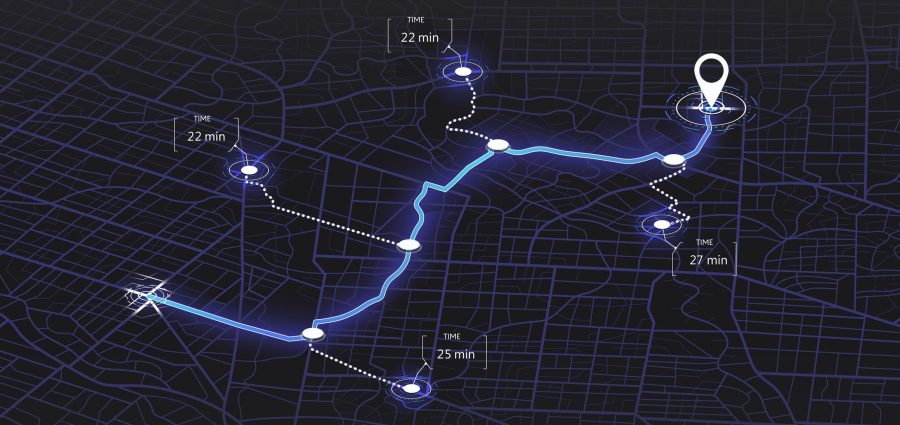
Reducing miles travelled across the last mile is a quick path to cutting operating costs, as long as fleet operators have the right technology driving the process. AI-optimized routing and fleet performance management solutions use real-time data, predictive analytics, and machine learning to create optimal delivery routes that eliminate wasted miles from every trip.
To build optimized routes, the technology considers a wide range of variables from road restrictions (e.g., speed limits, parking, permissible turns), customer time window requirements and historical traffic patterns to driver skills, customers’ business policies, and vehicle capacity, cost, and loading/unloading requirements. By reducing the number of stops, mileage (including deadhead miles), fuel consumption and service time, distributors can curtail fleet costs without compromising service reliability.
In light of escalating costs and tariff uncertainty, distribution-focused companies are re-evaluating their logistics and supply chain strategies through a cost-cutting lens. Many distributors are recognizing that taking advantage of AI-enabled route optimization and data analytics tools to reduce miles and travel time is an accessible tactic that translates to immediate, tangible cost savings — savings that can go a long way to protecting shrinking margins in an uncertain climate while still delivering a differentiated customer experience.
Related Posts
-

Robert Madden Industries acquired Shore Distributors, expanding RMI's service footprint into Maryland, Delaware and Virginia.
-
Continental Fuel Group, backed by Brenton Point Capital Partners, is pursuing acquisitions of commercial fuel…
-
Same-day sales were up mid-single digits vs. February alongside a solid year-over-year gain.