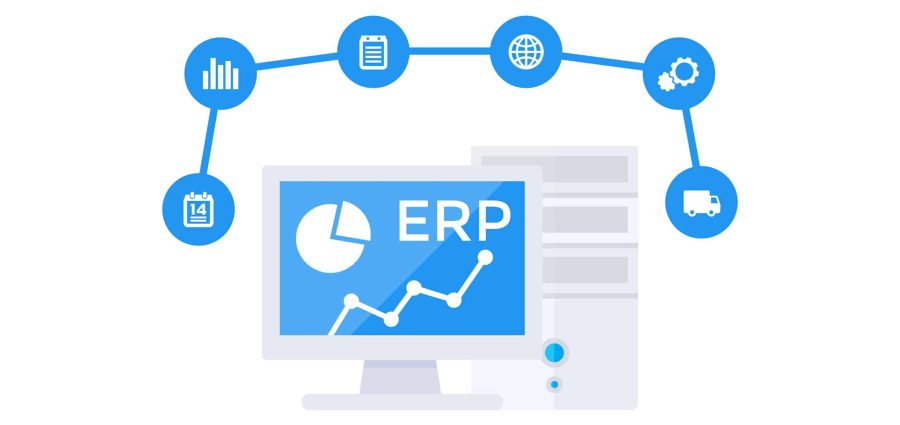
The word “legacy” usually has lofty connotations, but in the ERP world, it’s become a euphemism for “outdated,” “risky” and “broken.”
It’s like when a realtor says a house is “cozy” when what they really mean is “small.”
Our 2026 SHIFT Conference is May 12-14. Join us in Denver!
But a small house is only a problem if it’s less space than you need, and an older ERP system is only a problem if it’s actually broken and no longer working for your business. The truth is that for many companies, legacy systems are stable, deeply embedded in their workflows, and still reliably performing core operations.
So why is age a major issue? Why do distributors feel so much urgency around ERP migration?
I think it comes down to one thing: fear. Platform partners and resellers are scared that if they don’t get enough companies to upgrade and migrate, vendors will leave them in the dust. So they push, telling them that migration is inevitable, that all the smart distributors are already doing it.
Now the clients are scared, too: Scared of losing support, of falling behind, of not being sufficiently future-proofed. No business leader wants to look unprepared, so they go along with the migration, even if it doesn’t quite feel right yet.
Here’s the thing:
An ERP upgrade could very well be what your organization needs. But you can’t just do it because of external pressure or internal fear. It needs to be a strategic move. And that starts with understanding what an ERP system’s role really is.
ERPs don’t create a competitive advantage
An ERP platform is, at its core, a system of record. Businesses use them to keep track of transactions, maintain financial integrity, and support operational consistency. These are essential functions, but the platform itself doesn’t create competitive advantage by performing them. A new ERP is just a more expensive filing cabinet if your underlying workflows and strategies remain broken.
However, over time many distributors have built their competitive advantage on top of that system of record. Years of operational learning get embedded in pricing rules, workflows, integrations, and reporting logic that allow the business to execute faster and more consistently than competitors.
That institutional knowledge becomes part of the foundation of the company itself.
When companies migrate to a new ERP, that advantage rarely transfers cleanly. The business isn’t simply installing new software; it’s starting a multi-year effort to rebuild its operational differentiation brick by brick, recreating the workflows, rules, and intelligence that once lived inside the old system.
The most advanced ERP software in the world won’t help a company running ineffective workflows or a flawed strategy.
If data is used inefficiently, and if the process is part of a faulty strategy, then it doesn’t matter much where that data is stored.
Think of it this way: Every smartphone needs an operating system to function. But if you go to the app store and can’t find a single thing worth downloading, then who cares about the OS? If your ERP is the operating system, then your workflows and strategies are the killer apps – which generate real value.
In practice, companies tend to face a triple threat when they replace a deeply embedded system:
Operational Amnesia: Decades of tribal knowledge and custom workflow logic can disappear during migration.
The ROI Black Hole: ERP migrations frequently exceed their timelines and budgets, absorbing leadership attention and IT resources that could otherwise be spent on innovation.
Cultural Sabotage: If the new system introduces friction into daily workflows, top performers often build workarounds outside the system or leave.
If your existing ERP system is doing its job, do the benefits of migration outweigh those costs?
Should I Stay or Should I Go?
Before giving in to the pressure to upgrade, take a step back and consider your organization’s material circumstances. What problem would you be trying to solve by migrating to a new system? What will break if you do, and what will break if you don’t?
If your…
… core operations are stable and successful,
… legacy ERP system is still able to handle the volume and complexity of data your organization generates,
… and your business is currently focused on profitability, execution, or preparing for a transition of leadership or ownership,
then staying put may be the smarter and more strategic choice.
However, if your…
… ERP system is actively blocking growth or new business models due to its limitations,
… data integrity has been compromised,
… data scalability has reached its limit,
… security and compliance risks are real, not theoretical,
… and leadership is in it for the long haul and adept at change management,
then you may have legitimate reasons to take the leap.
In other words, timing is more important than tech trends. In many cases, the real deciding factor isn’t technology at all — it’s the ownership horizon.
Any decision you make around your ERP should align with how long current ownership expects to hold the business. A company preparing for a sale in three to five years should make very different technology decisions than one planning to operate and grow the business for the next 20. The decisions you make in the middle of a five-year exit plan should be different from the ones you make at the start of a long-term growth strategy. Either way, the fear of looking outdated shouldn’t factor into your thinking.
The only timeline that matters is your own.
Modernization Doesn’t Require a Complete Change-Out
Of course, there’s a difference between looking outdated and being outdated. It’s good to modernize. But you don’t necessarily need to replace your systems right away to do it.
Imagine your ERP environment is a house your business has lived in for years. Over time you’ve added rooms, rewired parts of the electrical system, and customized the layout so it fits how your organization actually works. An ERP migration is the equivalent of tearing down that house and starting over. Sometimes that’s necessary, but it’s disruptive, expensive, and erases years of accumulated design decisions.
Sometimes a better option is a strategic remodel.
Instead of tearing down the structure, companies can improve the workflows around their ERP system, adding intelligence and automation at the edges, and creating better visibility into operations and profitability.
This preserves institutional knowledge while still delivering meaningful operational improvements.
Don’t Let Fear Force Your Hand
Your ERP decision is no different than any other business decision. It should be made deliberately, with full awareness of the potential trade-offs. It should be based on your business’s timeline, not anyone else’s.
And most importantly, it should be motivated by strategy, not fear. Consider what problems would be solved by moving and weigh the costs against the benefits. If it doesn’t add up, consider an alternative path to modernization. And remember that “legacy” isn’t a dirty word.
Related Posts
-

Distributors clinging to outdated ERP systems may think they’re avoiding risk, but the hidden costs…
-

The acquisition strengthens Klipboard's SaaS presence in the U.S. wholesale distribution market.
-
This category can only be viewed by members. To view this category, sign up by…