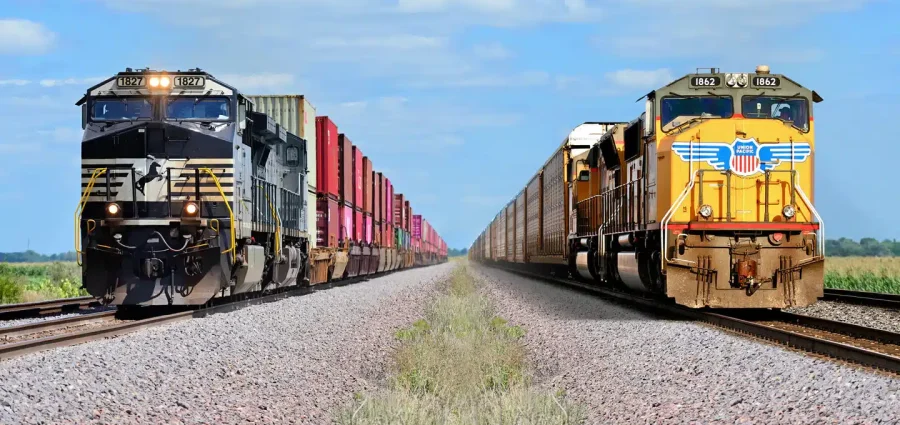
In a move that would create a transcontinental railroad from east-to-west coast and could reshape how construction materials, industrial chemicals and other commodities move across the country, Union Pacific announced a $85 billion bid to buy Norfolk Southern.
While the landmark deal still awaits review and approval by the Surface Transportation Board before becoming official (not expected until early 2027), the proposed merger of two of the six major freight railroads in the U.S. would create a combined network of more than 50,000 miles of track across 43 states and link East and West Coast ports under a single name.
MDM’s 2Q25 M&A Report (store link)
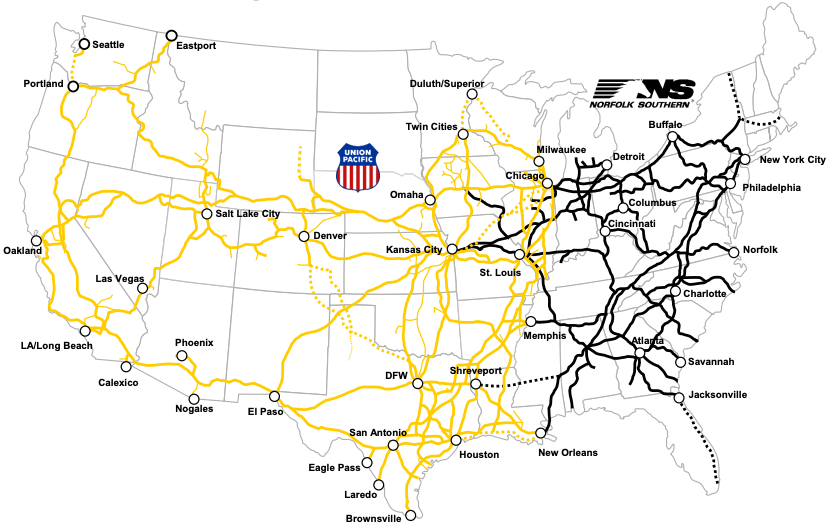
UP is one of the largest freight railroads in the U.S. and races neck-and-neck for that top spot with BNSF. With a pro-forma combined company revenue of about $36 billion, the merger would push the combined UP-NS railroad to No. 1.
Consolidation Opposition
In the wake of the deal announcement, some analysts believe the move may force a hand from the remaining top railroads, particularly BNSF and CSX, to consider a merger to stay competitive, further pushing consolidation.
In 2022, there were seven Class I freight railroads in the U.S. By 2023 there were six when the STB approved a merger between Canadian Pacific and Kansas City Southern to create the first single railroad linking Canada to Mexico. If the UP-NS deal goes through and predictions come to fruition, that number could shrink.
The idea of rail consolidation (and reduced competition) is troubling for some, especially for those holding memory of previous supply chain disruption and inefficacies in the wake of mergers — this AP report details some history of past rail mergers. The merger is also opposed by the largest rail union, SMART-TD.
Alliance for Chemical Distribution Responds
Eric Byer, President and CEO of the Alliance for Chemical Distribution (ACD), which represents 400 chemical distributors who rely on freight rail to transport material, issued a statement encouraging the STB to oppose the merger agreement.
“… Railroads are rarely held accountable for supply chain disruptions caused by extensive monopolies and an outdated regulatory system,” Bryer wrote. “Freight rail is already highly concentrated, and further consolidation will exacerbate existing challenges while expanding the rail industry’s market power and profit margins.”
In a statement shared with MDM, Byer said results of the association’s bi-annual rail survey of its members “underscore the monopolistic nature of the current rail system.”
“According to our findings, 45.2% of member companies only have access to one rail carrier, and more than 57% of ACD members reported that railroads were unable to make their own scheduled delivery date, disrupting their customers’ supply chains and business planning,” Byer said.

But Union Pacific says a transcontinental railroad would better compete with Canadian railroads to “win back” freight volumes; unlock more and unified rail options for shippers; and enhance the ease of doing business by allowing customers to receive single-line rate quotes and reduce gateway delays.
“The combined company will deliver faster, more comprehensive freight service to U.S. shippers by eliminating interchange delays, opening new routes, expanding intermodal services, and reducing distance and transit time on key rail corridors,” according to a July 29 news release announcing the deal.
Industrial Supply Chain Considerations
A third of Union Pacific’s freight revenue in 2024 came from the transportation of industrial commodities, including construction material, industrial chemicals, plastics, forest products (such as lumber), specialized products (such as roofing), metals and ores, petroleum and more to support everything from commercial and residential construction to manufacturing to packaging needs.

As a UP looks to integrate its network with NS, altering how these goods move across the country, the jury is still out on the major impacts or changes.
While a transcontinental railroad promises streamlined shipping and coordination for manufacturers and suppliers operating coast-to-coast, some believe rail consolidation threatens to reduce transportation alternatives and hike prices at the expense of its biggest customers.
Related Posts
-
AAA specializes in providing products that including keyless locks, magnifiers, knives and blades, floor protection…
-
BlackHawk Industrial named a new CFO, emphasizing the company’s continued investment in leadership to drive…
-

The industrial arm of Lonestar Electric has relocated to a larger building after closing 2024…