Ask most CFOs whether local commercial teams should be allowed to change prices market by market, and you’ll get the same reaction: discomfort. Giving dozens, or even hundreds, of teams pricing authority feels like inviting inconsistency. But trying to control every pricing decision from headquarters creates a different problem: one-size-fits-all decisions that ignore local market realities.
Consider one enterprise distributor. The CFO handled all pricing until the company decided that running it from the center was too restrictive and pushed it out to the commercial teams. The problem was that every pricing decision was spread across markets like peanut butter. But evenly spread isn’t strategic. If you already dominate your category in a given market, you don’t need to chase market share; you can raise prices to pursue higher margins.
Pushing pricing outward, however, raises a question: If I let local teams adjust prices down to the zip-code level, how do I know they won’t go too far? The worry is understandable, but when the system is designed correctly, control and responsiveness reinforce each other.
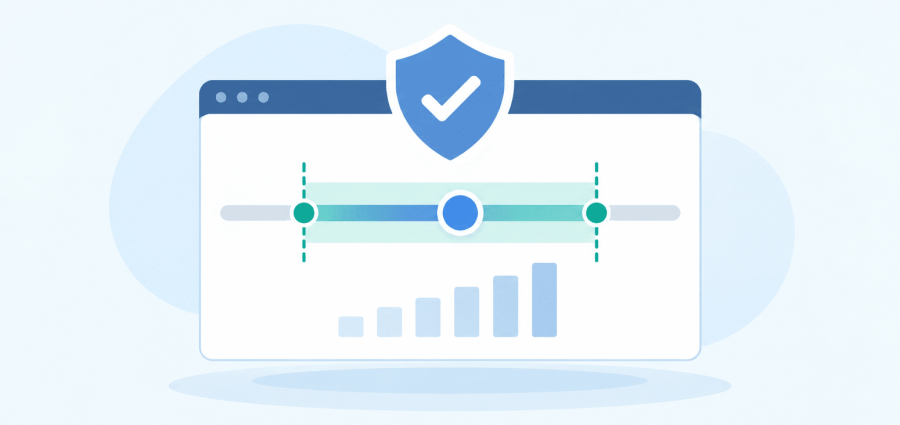
The best option is to give commercial teams a target price with a ceiling they can’t exceed and a floor they can’t fall below. The people closest to the customer can respond to local conditions within this pricing envelope. Outside it, they can’t. Instead of controlling every price, finance controls the system behind every price. The commercial team owns the decision while finance owns the guardrails.
More from Pascal Yammine on This Topic
Managed, Not Controlled
We’ve discovered that we don’t need to convince companies to adjust their prices more frequently. In fact, our research shows that 99% of companies report adjusting prices continuously, but only half are confident they can see how those changes affect their margins. So pricing decisions are happening, but they’re missing a system to keep them aligned.
Left unwatched, those guardrails lose their grip, and that loss of control shows up as creep: the target quietly moving away from where you set it. Creep cuts both ways. Say you sell a commodity product in one regional market, with a target price based on a trailing 12-month average. Discount aggressively for a year and that average falls, dragging next year’s target down with it, and your margin erodes from underneath. Price at the top of the range just as consistently and the reverse happens: the average climbs until you’ve crept past what customers are willing to pay, and they start shopping elsewhere. Either way, the number moved and nobody chose it.
That’s why the envelope isn’t enough. Finance also has to see how those local decisions accumulate over time. One of our customers discovered this problem only after an outside consulting firm analyzed its pricing data. Individually, every decision looked reasonable. Collectively, they had shifted the company’s pricing strategy without any one employee intending it. The creep was invisible until someone looked at the aggregate.
This is the real cost of fragmented pricing execution: not one bad decision, but thousands of reasonable ones, each made market by market, that never add up to a coherent whole. Left unchecked, price pulls away from strategy until it loses touch with reality.
That’s what control really looks like: not approving every transaction, but spotting patterns no individual market can see and resetting them before temporary decisions become a permanent strategy.
Why Controls Matter More With AI
AI makes this philosophy even more important. One of my team members recently ran the same pricing question through a general-purpose LLM twice, changing only the wording. The answers came back materially different. That’s how generative systems work: they’re nondeterministic. This makes them powerful for exploring possibilities, but the wrong foundation for a control you mean to enforce.
A deterministic system is the opposite: the same inputs produce the same explainable output, every time. That’s what makes it auditable and what makes a reset possible in the first place. You can only undo creep in a system that will give you the same answer twice. If the baseline itself shifts every time you query it, there’s nothing stable to reset to. You’ve traded a slow creep you could at least catch for a fast one you can’t.
As AI becomes part of more pricing decisions, the need for deterministic controls only grows. Finance still needs approvals, auditability and the ability to understand why a recommendation was made so they can reset it when conditions change.
Flexibility for Commercial Teams, Visibility for Finance
Finance doesn’t need visibility into every individual price. It needs to know that thousands of fragmented, market-by-market decisions still add up to a single, coherent strategy.
Volatility isn’t going away, and neither is AI. Both increase the number of pricing decisions companies have to make and the speed at which they have to make them.
Give commercial teams the flexibility to respond to their markets. Give finance the visibility to recognize creep before it becomes direction. Do both, and the business gains something far more valuable than tighter control: the confidence to move quickly without losing its way.
Related Posts
-

This category can only be viewed by members. To view this category, sign up by…
-

This category can only be viewed by members. To view this category, sign up by…
-

The new Pricing and Revenue Growth Management practice becomes the fourth business line for the…