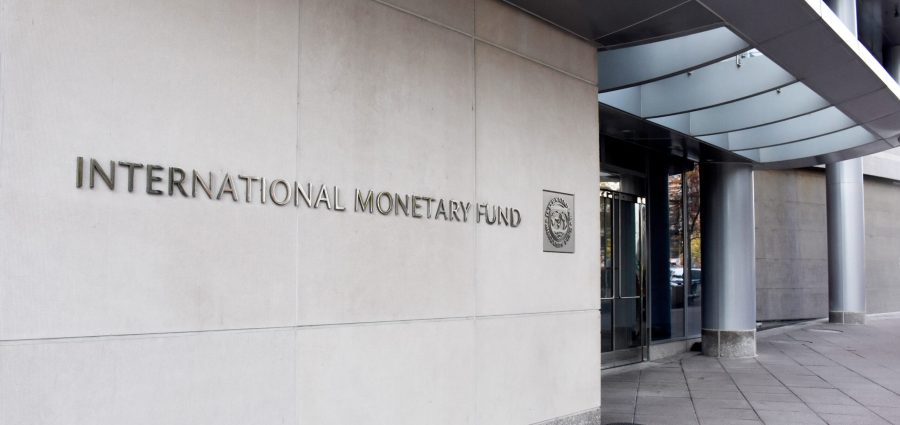
The International Monetary Fund lowered its 2026 global economic growth forecast in its July World Economic Outlook update, citing the lingering impact of the Iran War, ongoing inflation pressures and uneven effects across countries.
The IMF now projects global growth of 3.0% in 2026, down 0.1 percentage point from its April forecast, before rebounding to 3.4% in 2027. That follows estimated global growth of 3.5% in both 2024 and 2025. The IMF said the global outlook is being shaped by two opposing forces: the negative supply shock from the Middle East conflict and a positive technology cycle driven by investment in artificial intelligence and related tools.
The organization said the impact is uneven, with energy importers and vulnerable economies facing the most pressure, while countries more integrated into the technology value chain are seeing stronger activity. The IMF said the global economy has so far “weathered the shock from the war better than feared,” aided by inventory drawdowns, expanded production outside the Gulf and lower energy intensity in many economies.
Inflation remains a key concern. The IMF revised its global headline inflation forecast up to 4.7% for 2026, compared with 4.1% in 2025, before an expected decline to 3.9% in 2027. The organization said the disinflation trend that had been in place since early 2024 has stalled, though it noted limited evidence so far of broader second-round inflation effects.
The IMF left its U.S. growth forecast unchanged for 2026 at 2.3%, with 2027 projected at 2.2%, up 0.1 percentage point from April. The organization said U.S. activity is being supported by fiscal policy, accommodative financial conditions, continued technology-related business investment and productivity strength, with only limited drag from higher energy prices. The IMF estimated U.S. GDP grew at a 2.1% annualized rate in the first quarter, below its April projection of 2.5% but still a solid pace.
Risks remain tilted to the downside, though less so than in April. The IMF said renewed escalation in the Middle East could reignite commodity price volatility, tighten financial conditions, strain policy buffers and worsen food insecurity in low-income countries. Upside risks include faster AI adoption and a quicker normalization of trade through the Strait of Hormuz.
Related Posts
-

ISM’s Spring 2026 Supply Chain Planning Forecast shows higher revenue, capital spending and capacity utilization…
-
The bank said the resilience reflects better-than-expected growth — especially in the United States, which…
-

NetPlus Alliance’s latest Industry Outlook showed a strong start to 2026 among its distributor members,…