
Preparing students for a distribution career increasingly means preparing them to tackle problems that don’t fit neatly into a single discipline. A warehouse technology upgrade involves employee training. A new customer relationship management system needs people to use it. Product data must be organized before it can support better purchasing decisions.

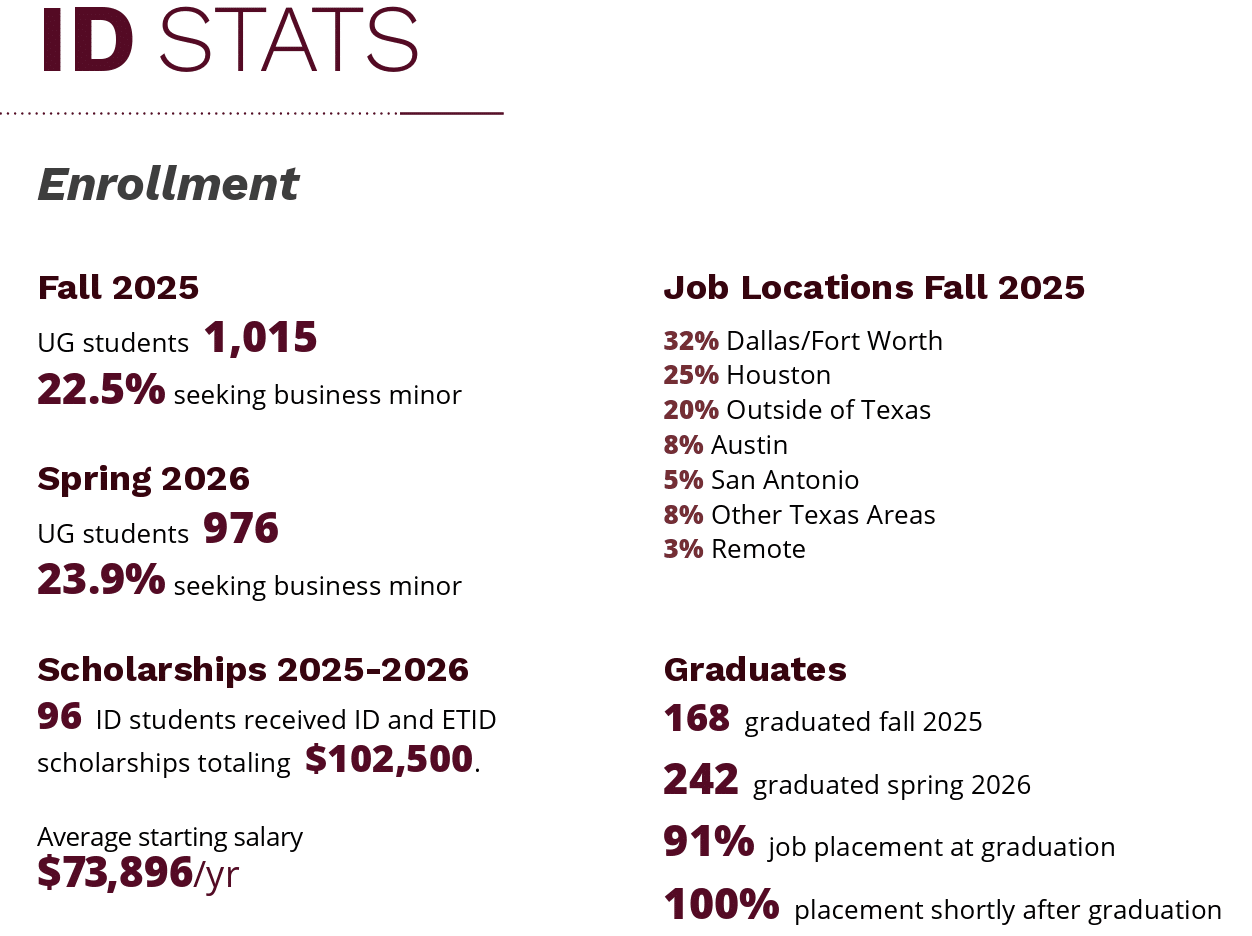
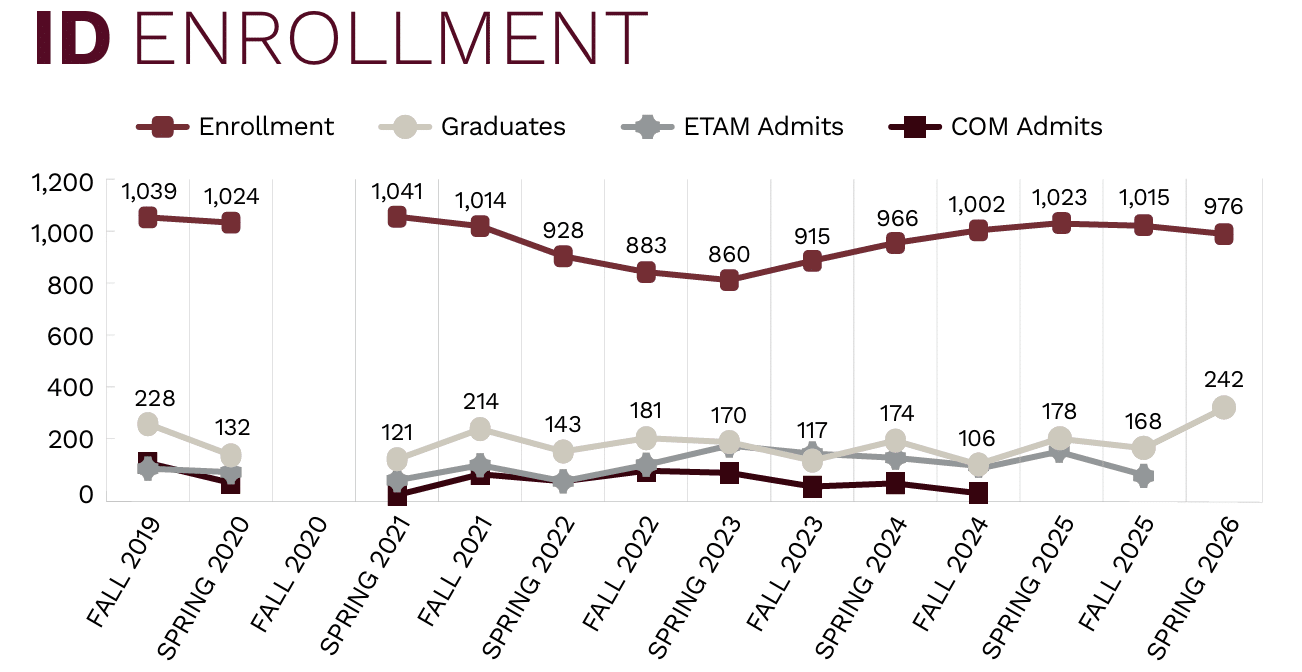
The program enrolled 1,015 undergraduates in fall 2025 and 976 in spring 2026, according to its 2025-2026 annual report. It produced 410 graduates across those semesters and reported 91% job placement at graduation, reaching 100% shortly afterward. Average starting salary was $73,896.
Behind those figures is a relationship with industry that shapes both students’ education and their introduction to potential employers.
“The program has grown into a complete package’for the industry, supplying talent, training, research, and extensive industry interaction,” says Mark Johnson, Professor of Practice, Engineering Technology & Industrial Distribution at TAMU, who has been on the faculty since 2014 and is a retired U.S. Army Colonel with 29 years of service.
Editor’s Note: MDM has given a state-of-the-industry and data analytics presentation to Johnson’s TAMU classes twice per year since at least 2022.
What Employers Expect Now
Johnson describes a program that has evolved from teaching logistics and product-focused skills toward service, technology and digital distribution. Advances in AI, automation and analytics, along with mergers and acquisitions and greater industry complexity, have influenced that evolution.
Employers’ expectations have changed with it. Distributors want graduates who can contribute quickly, combining technical proficiency with communication, leadership, critical thinking and problem-solving skills. They also want people interested in career challenges and advancement.
“The blend of engineering, sales, operations, finance, and technology skills makes graduates in high demand,” Johnson told MDM.
Developing that mix requires more than adding technology coursework. TAMU’s Industrial Distribution program students build technical and interpersonal capabilities through labs, competitions, presentations, networking events and internships. Partnerships with technology companies give students hands-on exposure to tools, while faculty work with industry partners to understand productive applications of AI and automation.
The objective is to prepare students for workplaces where understanding a system and helping people use it are closely connected responsibilities.
Making Distribution Visible
Before students can pursue those opportunities, they need to understand what a distribution career offers.
In TAMU’s ID program, introductory courses, guest speakers, practical examples and faculty members with industry experience establish that foundation. Internships, company-sponsored projects and site visits then help students identify employers and career paths that match their interests.
“Exposure to growth opportunities and the importance of distribution in the economy attracts students,” Johnson says.
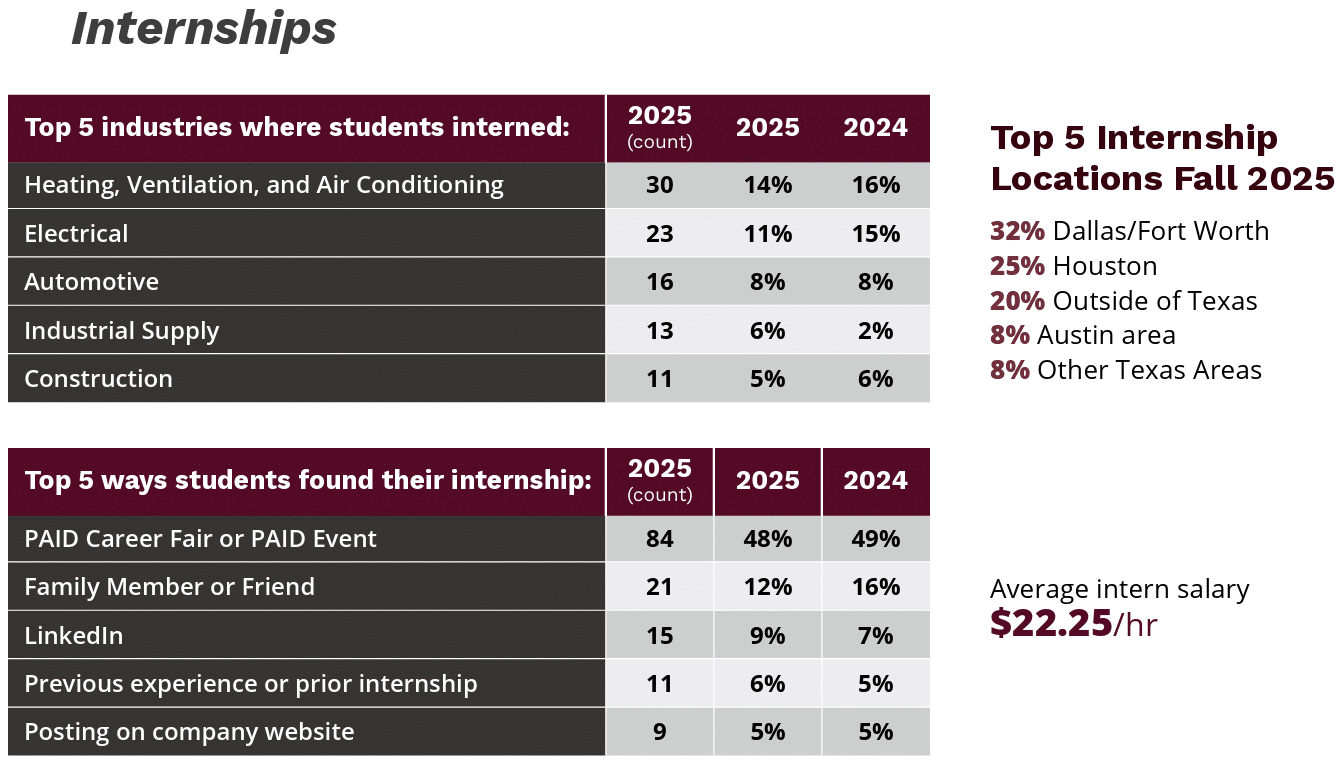
The program’s Professional Association for Industrial Distribution, or PAID, provides a substantial recruiting connection. Its spring 2026 career fair drew 100 companies and 620 students, according to the program’s latest annual report. Among reported internship-finding methods for 2025, a PAID career fair or event accounted for 48%.
That contact extends beyond recruiting days. PAID hosted 14 Power Lunches during the academic year, with each drawing more than 350 students to meet industry leaders. Resume reviews, mock interviews and other workshops help students prepare for the hiring process.
For distributors, these activities provide opportunities to introduce students to their businesses before a full-time job offer is on the table.

Applying the Education
Capstone projects bring students into the operational challenges their prospective employers face.
“Teams of faculty coordinate with companies to select projects, ensuring mutual benefit and strong real-world application. These experiences further expose students to industry challenges and working environments,” Johnson says.
The annual report’s examples include a project with HVAC distributor Bell Simons to evaluate ERP modernization and RFID adoption. Students recommended a phased rollout across 30 branches, with early-adopter employees helping lead subsequent implementations. The proposal projected $4 million in annual savings against a $2.92 million project cost, with payback in under 18 months.
Other assignments addressed the work required to make technology useful. A team working with distributor Motion & Flow Control Products developed CRM adoption recommendations, including a KPI dashboard, gamification guidance and support for data quality and champion users. A project with rotating equipment distributor DXP Enterprises developed an application to clean and standardize SKU data, intended to reduce manual work for its sourcing team.
Together, the examples show students addressing software, workflows and employee adoption within the same business problem.
Keeping Pace With Industry
Johnson describes curriculum development as an ongoing collaboration among faculty, students and industry partners, rather than an occasional update.
“Continuous industry interaction and feedback ensure the curriculum aligns with current and foreseeable industry needs,” he says.
That approach also informs the program’s next steps: refreshing the undergraduate curriculum, expanding industrial distribution to Texas A&M’s Fort Worth campus and developing a residential master’s offering focused on data-driven strategy.
Johnson says the Dallas-Fort Worth expansion brings students and faculty closer to industry hubs, creating more opportunities for research, education and employment. The curriculum and graduate-program initiatives respond to demand for advanced analytics, digital transformation and leadership.
“Initiatives are driven by industry partner input; the goal is to continuously evolve and provide talent equipped for future competitiveness and leadership,” Johnson says.
The Final Word
At 70, TAMU’s ID program next chapter will depend on maintaining that connection: understanding what distributors need, introducing students to the opportunities and preparing them to contribute when they arrive.
Related Posts
-

The packaging, JanSan and foodservice disposables distributor promoted a VP to the top finance role,…
-

This category can only be viewed by members. To view this category, sign up by…
-

The Laval facility expands TricorBraun’s Canadian distribution network and is designed to improve delivery times,…