In distribution, rebates received from manufacturers are both a tool for margin protection (commonly through price padding) and for incentivizing specific customer behaviors. However, negotiating rebates without a clear purpose can create unforeseen challenges in sales pricing, particularly for distributors using a cost-plus pricing model.
This is most likely to occur when procurement teams are incentivized based on how much they increase rebates. In the absence of good data on net pricing—or better yet, on true product profitability—some businesses feel they have no choice but to measure procurement activity on rebates alone. This approach persists because rebates are easier to measure, making them a convenient basis for bonuses, even if it leads to pricing misalignment and margin erosion.
In the Store: MDM’s U.S. MRO Market Trends Report
Negotiating excessive rebates can inadvertently inflate invoice costs, leading to uncompetitive sales prices and declining sales volumes. Below, we will examine how a well-intentioned rebate strategy at Company A gradually resulted in a sales pricing dilemma and how a more purpose-driven approach could have avoided this issue.
Ultimately, let’s look at what can happen when a buyer stops asking themselves, “What is the purpose of this rebate?”
Year 1: A Well-Balanced Rebate Strategy
Company A initially adopts a clear and effective rebate strategy. The rebate pads the net cost to achieve an invoice price that allows for a competitive sales price under their straightforward Invoice Cost+25% pricing model. The company is satisfied with its market position, aiming to maintain competitive pricing without undercutting the competition.
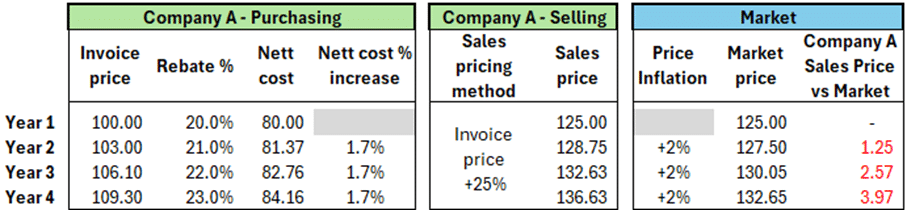
At this point, the rebate serves its intended purpose: protecting margins while maintaining sales price credibility. The pricing strategy is simple, transparent and well-understood by the sales team.
MDM’s SHIFT Conference Coming May 13-15 – Register Here
Years 2-4: The Unintended Consequences of Rebate Inflation
Over the next few years, the supplier announces 2% annual price increases to the market to keep pace with inflation. Company A’s buyer negotiates effectively, achieving net cost increases of just 1.7% per year, outperforming the market’s 2% inflation. On the surface, this appears to be a successful procurement strategy.
MDM’s Virtual AI Summit Set for March 12 – Register Here
However, to secure these favorable net costs, the buyer agrees to a 3% increase in invoice prices, offset by a corresponding increase in rebates. As a result, Company A continues to apply its Invoice Cost+25% sales pricing model, unaware that the inflated invoice costs are pushing its selling prices further above the market average.
By the end of Year 4, the selling price is 3.97 higher than the competition. This disconnect between invoice cost and market pricing leads to declining sales volumes as customers find better prices elsewhere. The very rebate designed to protect margins now threatens sales price competitiveness.
Year 4: Attempted Solution – Adjusting Mark-Up Percentages
Recognizing the issue, let’s imagine that Company A in Year 4 revised its sales pricing methodology to restore competitiveness. The company adjusts its markup from +25.00% to +21.36%, aligning its selling price with market norms.

While this resolves the immediate problem of inflated sales prices, it introduces a new challenge:
- Complexity and Confusion: The revised markup percentage deviates from the clear and consistent Invoice Cost+25.00% model that the sales team was accustomed to.
- Inconsistent Pricing Structure: Given that the purchasing structure did not change uniformly across all products, different markups are now needed for each item, complicating pricing calculations and communication with the sales team.
This reactive approach to sales pricing feels disjointed, akin to “the tail wagging the dog.” It compromises the simplicity and transparency that initially made the pricing model effective.
Year 5: The Rebate Reset – Getting Back on Track
Determined to restore clarity, Company A decides to restructure its purchase pricing in line with the formula that worked well in Year 1. This “Rebate Reset” aims to realign purchase invoice costs and rebates with credible sales pricing.
In the Store: MDM’s 2024 Annual Economic Outlook Report (free for Premium)
However, to avoid a new pitfall, Company A must also reset its sales prices simultaneously. If the sales prices are not adjusted along with the rebates, the company risks under-pricing its products, which could correct the volume issue but significantly damage margins. The scenario below illustrates the impact of addressing the purchase price structure without any change to the sales pricing methodology.

The optimal reset strategy looks like this:
- Recalculate Rebates Purposefully: In Year 5, the correct rebate rate for Company A is 20.925%, not the 20% used in Year 1. This rate reflects the procurement savings achieved by limiting net price increases to 1.7% per annum, while the rest of the market experienced 2% increases.
- Align Sales and Purchasing Strategies: Adjust both sales pricing and rebate strategies concurrently to maintain sales price credibility and protect margins.

This approach preserves the purpose of the rebate—margin protection—without compromising competitive pricing. See below:
The Importance of Purpose-Driven Rebate Strategies
Reflecting on the 5-year journey, it becomes clear that Company A’s rebate should have gradually increased from 20% to 20.925%, rather than the excessive increments that led to inflated sales prices. While the buyer successfully negotiated procurement savings, the misalignment between rebate growth and sales pricing methodology created a pricing dilemma for the company and its sales team. While this may have served the buyer personally due to the way their performance was incentivized, this had serious consequences for the profitability of Company A.
MDM’s 4Q24 M&A Report (store link)
The core issue arose when the buyer lost sight of the rebate’s purpose. By adopting a more strategic, purpose-driven rebate structure, distributors can safeguard their margins without sacrificing market competitiveness. Rather than allowing rebates to dictate pricing strategy, distributors must ensure that pricing remains transparent, competitive, and aligned with their overall business goals.
Related Posts
-

Auckland-based Flintfox is a provider of automated pricing solutions.
-
CO-based Distributor Wire and Cable is a master distributor of wire and cable products, operating…
-
The new president brings over 27 years of executive leadership experience and is expected to…