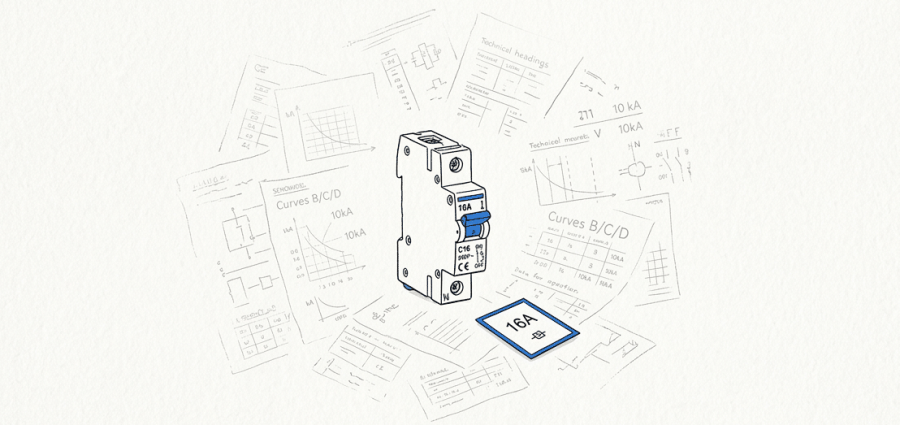
In 1991, electrical installers in the Netherlands had had enough: every manufacturer described the same circuit breaker differently. Ordering was error-prone, sourcing was slow. They proposed a solution: a shared classification model for technical products. They called it ETIM, and French distribution giant Sonepar took it under its wing. Today it covers 5,500 product classes in over 20 countries, with the same pattern playing out across MRO, HVAC and plumbing.
Since then, billions have gone into the Product Information Managers, data pools, and catalog teams solving the product data problem. While a dent has been made, onboarding manufacturer products remains a largely manual process. Why is that?
Product data maintenance grew as a fixed-cost tax of the shift to portals; optional for phone-sales, they became crucial for self-serve public catalogs. While Sonepar can afford the PIM and Master Data Management teams for their search taxonomy, can you? Cebeo, a Belgian distributor with 1.9 million products, had product managers doing 400 ETIM lookups a month to classify their new listings (source). Meanwhile, 75% of manufacturers reported difficulty filling data steward roles (source). Schneider can afford the teams to publish structured catalogs for each partner. But smaller players play catch-up, if they play at all.
This is changing. AI advancements and industry associations are reducing the cost of three specific jobs that sit between the manufacturer, and getting products listed with their distributors.
Cheaper publishing for small manufacturers
Standardizing products is largely a data organization problem. McKinsey suggests it typically takes 10 to 15 interactions with suppliers to launch a line. A rep drops off a USB stick with 14 PDFs, a price list in a .xls that was clearly exported from an ERP nobody’s heard of, and a link to a website that hasn’t been updated since 2019. This clean up has to be paid for, or avoided.
The industry built rails to try and fix this; data pools like 2BA, the IDEA Connector, PIMs that auto-publish to them, and standards bodies that iterate on content specs. That infrastructure has grown in popularity, lowering the manufacturer’s work from 10 standards to a smaller set. What didn’t exist, until recently, was a way for a 200-SKU manufacturer to actually use them without large teams building systems up-front.
The onboarding rails to these standards have eased through AI. Gone are the days of $50k consulting contracts to publish a product to 2BA or IDEA. Recent AI models, with RAG systems, are exceptional at synthesizing chaotic PDFs, excels, and outputting structured ETIM 10.0 classifications with a review queue. Small manufacturers can approach Schneider quality data, using software paired with lighter personnel. This applies across industries that have digitized standards; ECLASS in industrial, UNSPSC in MRO, GS1 in building materials, or for more regulated manufacturers with complex product content flows, requiring documents from their R&D teams.
Distributors’ new item onboarding meeting manufacturers where they are
What of manufacturers not using these standards? Even mature data pools only cover a fraction of all SKUs, and miss distributor-specific attributes. This cost today is typically borne by distributor MDM teams, cleaning manufacturer assets by hand or via offshore teams. But that too is changing.
The growth of PIM systems has forced distributors to clearly define their product content standards. Standards which AI is well tailored to conform to. A natural extension is for distributors to ask for (or find) whatever exists: a website, 3rd party enrichments, PDFs, shared spreadsheets, an email. AI can extract the data, normalize it, and conform it to their own well-documented model, citing from multiple sources. Structured human in the loop flows, blending multiple sources of data, can then increase new-item throughput by 2-3x, without requiring clean manufacturer data.
Take Rexel; they were classifying 1% of their catalog per year against ETIM. After deploying AI classification with structured human review, that jumped to 10% a year: 12,000 classifications in three months, with 98% alignment to their internal validation (source). Large distributors, with ops teams doing this manually, will be first movers in this space.
Product data governance automation
The challenge of launching products is not simply data cleaning; it is maintaining the content model itself. Which attributes are required per category, how UOM hierarchy is modeled, which product relations matter. Inside a mature distributor, that model is the result of years of iteration, beyond industry rails. Sonepar’s public Product Data Guidelines run to dozens of pages.
Once defined, the problem is the maintenance of this model. Every product onboarded is a judgment call: is the taxonomy still right for this SKU, or has the assortment shifted enough that the model needs updating? Here, AI can surface recommendations live during onboarding, with humans reviewing its suggestions in the loop. This pushes decisions to the sales team, while IT runs quarterly backfills on the evolved content model to operationalize any changes at scale.
The Final Word
The cost of listing a manufacturer’s product in distribution is collapsing. Manufacturers can turn ERP chaos into standardized products in under a week. Distributors can onboard suppliers from whatever they have instead of waiting for clean data upstream. And the governance layer that holds it all together no longer needs to be maintained entirely by hand. The downstream effects — a thriving manufacturer ecosystem, search that works, configurators that configure, procurement automation that doesn’t hallucinate — depend on that foundation.
There’s still plenty of room for improvement here, but enough tools are available now for distributors to make life easier on themselves on the front of getting their products listed. Net-net, the product data tax is being repriced.
Related Posts
-

It results in a combined industrial packaging, JanSan and foodservice distributor with $28 billion in…
-

Hills Distribution now includes Plimpton & Hills, Coastal Supply Group, RJ Murray Company and Bender…
-

The facility features an expanded footprint and improved layout to enable greater throughput.